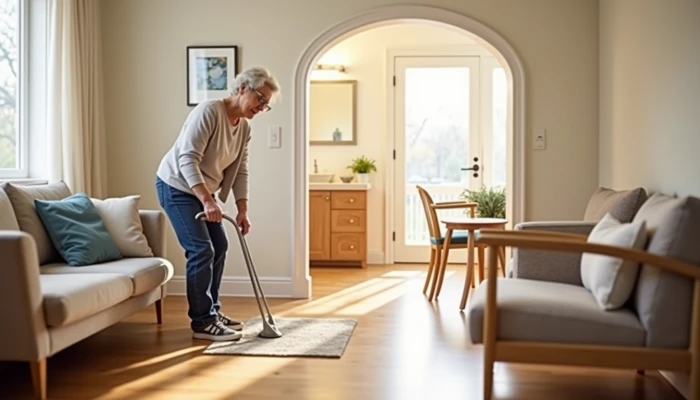
Affordable Home Safety Changes That Can Make Aging at Home Easier
Making a home safer for an older adult does not always require a large renovation budget. Many families start with small changes because they need something practical now, not a full remodel later.
For households focused on aging in place, the most useful upgrades are often the simplest ones: better lighting, fewer slip hazards, easier bathroom support, and clearer walking paths. These changes may not solve every safety concern, but they can make daily routines more manageable and help caregivers focus spending where it matters most.
This guide looks at budget-friendly home modifications with immediate value, room-by-room ideas, expert-recommended ways to prioritize, and common sources of financial help. The goal is not perfection. It is to make thoughtful improvements that fit the person, the home, and the budget.
Non-Invasive Safety Solutions with Immediate Impact
If you need a starting point, begin with changes that are low-cost, quick to install, and easy to reverse. Implementation guidance and review literature commonly emphasize lighting, slip resistance, and hand support as practical first steps.
A few upgrades often rise to the top because they address common everyday hazards:
- Add plug-in night lights or motion-sensor lights in hallways, bathrooms, and the path from bed to toilet.
- Increase brightness near entryways, stairs, and kitchen work areas.
- Remove or se loose rugs, and use non-slip backing where rugs need to stay.
- Place non-slip bath mats inside and outside the shower or tub.
- Install grab bars for seniors in the bathroom near the toilet and bathing area, using appropriate mounting hardware and professional installation when needed.
These are especially helpful because they do not require major structural work. They can also be done one area at a time, which makes them easier to budget for.
For many families, the bathroom and nighttime walking path deserve first attention. Low light, wet floors, and rushed movements can combine into a higher-risk situation. Even a small lighting upgrade can make the home easier to navigate after dark.
Use this quick starting checklist for a basic home safety checklist for elderly parents:
- Is the path from bed to bathroom well lit?
- Are loose rugs removed or sed?
- Are bathroom floors protected with non-slip surfaces?
- Is there stable hand support where sitting, standing, or stepping over a tub edge is difficult?
- Are cords, clutter, and small furniture kept out of walkways?
One important caution: not every “easy install” option is equally reliable. Suction accessories and temporary fixtures may be less dependable than properly mounted supports. When the change involves weight-bearing support, it is wise to confirm that installation matches the wall type and the user’s needs.
Cost-Effective Room-Specific Modifications
Some of the most useful low-cost changes come from focusing on the rooms where daily tasks are hardest. A room-by-room approach helps families avoid spending on upgrades that look helpful but do not address the real problem.
In bathroom safety for seniors, small changes can have a high practical return. Bathing and toileting involve wet surfaces, transfers, and balance challenges, so simple supports often matter more than cosmetic updates.
Consider these bathroom changes:
- Shower chairs or bath benches for seated bathing
- Grab bars near the shower, tub, and toilet
- Handheld shower attachments if reaching and turning are difficult
- Raised toilet seats when standing up is a challenge
- Non-slip strips or mats on wet surfaces
In the kitchen, the goal is usually easier access and less strain rather than a full redesign. Lever-style faucet handles can be easier for stiff hands to use. Frequently used items can be moved from low cabinets or high shelves to waist-level storage. If electrical outlets or switches are hard to reach, discuss safer placement changes with a licensed professional rather than attempting electrical work yourself.
Stairs deserve attention even when a stair lift is not in the budget. Temporary non-slip treads, improved overhead lighting, and contrasting edge markings can make each step easier to see. Se handrails on at least one side, and ideally both, may also improve everyday confidence and stability.
This simple comparison can help with prioritization:
| Area | Low-cost modification | Why it helps | When to get professional help |
|---|---|---|---|
| Bathroom | Grab bars, shower chair, non-slip mat | Supports transfers and reduces slip hazards | For wall-mounted bars or if balance is significantly limited |
| Bedroom to bathroom path | Night lights, clutter removal, brighter bulbs | Improves visibility during nighttime walking | If wiring or fixture replacement is needed |
| Kitchen | Lever handles, better item placement, anti-fatigue layout changes | Reduces reaching, twisting, and hand strain | For outlet relocation or fixture installation |
| Stairs | Non-slip treads, contrast tape, brighter lighting | Improves traction and step visibility | For rail installation or repair |
A useful rule is to match the modification to the task that feels hardest. If stepping into the tub is the main issue, start there. If the person is steady in the bathroom but struggles on dark stairs, stair visibility may deserve the first dollars instead.
Expert-Recommended Budget Strategies
When money is limited, prioritization matters as much as the modifications themselves. Expert guidance often recommends starting with the places where a person already struggles, rather than trying to upgrade the whole house at once.
An occupational therapist can be especially helpful for this step. Home safety assessments are designed to look at how a person moves through daily routines such as bathing, dressing, cooking, and getting in and out of bed. That can reveal low-cost changes that are easy to miss if you only look at the house, not the person using it.
Certified Aging-in-Place Specialists can also help families think through layout, access, and practical sequencing. Their value is often in helping you avoid spending on the wrong project first.
A simple budget-first sequence looks like this:
- Identify the daily activity that feels least safe or most difficult.
- Fix immediate hazards such as poor lighting, clutter, loose rugs, and slippery surfaces.
- Add support features for transfers, especially in bathrooms and on stairs.
- Reassess after a few weeks to see what still causes strain or hesitation.
- Save larger projects for needs that remain after lower-cost options have been tried.
This approach works well because it keeps the plan tied to real use. It also supports non-invasive solutions before moving to more expensive work.
A few common budget mistakes are worth avoiding:
- Buying equipment before measuring the space
- Installing supports without considering how the person actually moves
- Spending on visible upgrades before fixing basic hazards
- Assuming one solution is right for every older adult
- Delaying professional input when the person has already had falls or major mobility changes
If you are unsure where to begin, start by observing one full routine, such as getting ready for bed or taking a shower. The points where the person pauses, reaches awkwardly, or asks for help often show where the next dollar should go.
Financial Assistance and Tax Incentives
Even modest home changes can add up, so it helps to check for outside support before paying out of pocket for everything. Available programs vary by location and eligibility, but several categories are commonly worth reviewing.
Potential sources of help may include:
- Medicaid-related home and community-based support programs in some states
- Veterans benefits for eligible former service members
- Nonprofit repair or accessibility programs
- Community agencies serving older adults or low-income households
- Local volunteer groups that help with minor home safety improvements
Some organizations also point families toward adaptive equipment as a lower-cost first step when larger renovations are not realistic. That can include items such as shower chairs, toilet risers, and transfer benches.
Tax treatment can be more complicated. Some home modification expenses may be deductible in certain situations, but eligibility depends on current rules and personal circumstances. It is safer to treat this as a question to verify with a qualified tax professional or an authoritative government source rather than assuming a deduction will apply.
If you are comparing options, gather these details before applying for assistance:
- The specific safety problem being addressed
- A basic cost estimate for the modification
- Whether the change is temporary equipment or a permanent installation
- Any documentation of mobility limitations if a program requires it
- Whether a licensed contractor or installer is needed
A practical way to manage costs is to separate projects into three groups:
- Do now: urgent low-cost fixes such as lighting, mats, and clutter removal
- Plan next: moderate-cost upgrades such as grab bars, rail improvements, or shower seating
- Research funding: larger changes that may qualify for grants or community assistance
This kind of phased plan can make progress feel more manageable. It also helps families improve safety now while they explore longer-term funding for bigger needs.
Conclusion
Low-cost home modifications can be a realistic way to support safer, more comfortable living at home. The most effective budget approach is usually not to change everything at once, but to start with the hazards and daily tasks that create the most difficulty.
For many households, that means beginning with lighting, slip resistance, bathroom support, and safer stair use. From there, a simple reassessment can show what still needs attention.
Professional guidance can help when needs are changing, when transfers are becoming harder, or when installation quality affects safety. Combined with a regular home safety checklist, small improvements can add up to a home that better supports independence without requiring an expensive remodel.