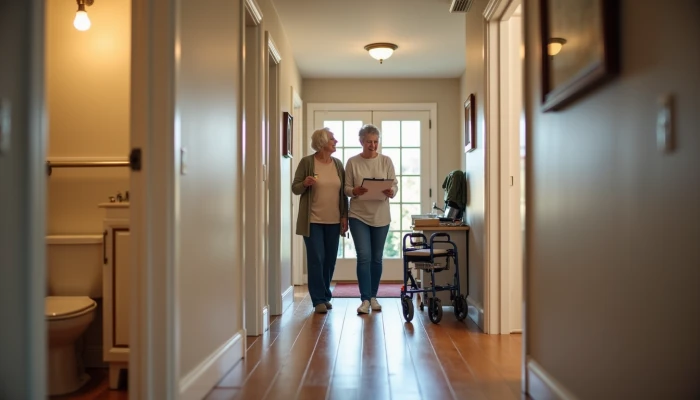
A Step-by-Step Home Safety Walkthrough for Aging at Home
A home can work well for someone for years and then slowly become harder to use as balance, strength, vision, or stamina change. That does not mean a move is always necessary. In many cases, families can make practical adjustments that support comfort, access, and independence.
The challenge is knowing where to start. Many caregivers and older adults can see that something feels "off" in the home, but they do not have a clear way to assess risk room by room.
This guide offers a structured home safety assessment for seniors that families can do on their own. It focuses on common household hazards, fall risk clues, and realistic DIY safety modification ideas that stay within safe limits. It is not a substitute for medical care or a professional evaluation, but it can help you organize what to check, what to fix first, and when to ask for added support.
Understanding the Home Safety Assessment Process
A useful home safety review is more than a quick glance around the house. It helps to follow the same path each time and look at the home through the older adult's daily routine: getting out of bed, walking to the bathroom, preparing meals, bathing, using stairs, and reaching everyday items.
Occupational therapy guidance and home safety tools commonly recommend a room-by-room approach. That structure makes it easier to notice patterns such as cluttered walkways, poor lighting, hard-to-reach storage, and surfaces that may increase fall risk.
Start with the areas where falls and near-falls are most likely to happen.
- Bathroom
- Stairs and steps
- Bedroom-to-bathroom path at night
- Kitchen work areas
- Entryways and uneven transitions
As you walk through the home, look for three types of problems.
- Tripping hazards: loose rugs, cords, clutter, uneven flooring, pet items
- Access barriers: narrow paths, low seating, hard-to-reach shelves, missing hand support
- Visibility issues: dim bulbs, glare, missing night lighting, hard-to-see edges
A simple scoring framework can help you prioritize what to address first.
| Risk level | What it means | What to do |
|---|---|---|
| High | Could lead to a fall or injury soon, especially in a daily-use area | Fix as soon as possible |
| Creates difficulty or adds risk, but may not be urgent today | Plan changes next | |
| Low | Minor inconvenience or future concern | Recheck during the next review |
If you want a starting point, home fall prevention checklists developed for older adults can help you avoid missing obvious hazards. The goal is not to create a perfect home. It is to make the home easier and safer to use for the person who lives there now.
Room-by-Room Safety Evaluation Framework
Use the same process in each room: stand at the doorway, scan the floor, check lighting, review walking space, and then look at the tasks done in that room.
Here is a practical walkthrough.
Bathroom
Bathroom safety for seniors deserves special attention because bathing, toileting, and wet surfaces can combine several risks at once.
Check for the following.
- Grab bars for seniors near the toilet and bathing area, sed properly rather than attached like a towel bar
- Non-slip surfaces inside and outside the shower or tub
- Bright lighting, including the path used at night
- A shower chair or bath seat if standing for bathing is difficult
- Frequently used items stored within easy reach
- Water temperature set to a level that helps reduce scald risk
Watch the person step in, step out, sit down, and stand up if they are comfortable doing so. That often reveals more than a visual inspection alone.
Kitchen
The kitchen should support safe movement and reduce unnecessary reaching, bending, and carrying.
Check for the following.
- Clear walking paths between sink, refrigerator, and stove
- Rugs removed or sed if they shift underfoot
- Everyday dishes, food, and tools placed between waist and shoulder height
- Good task lighting over work areas
- Stable seating if the person needs to rest while preparing food
- Frequently used appliances placed where cords do not cross walkways
Stairs
Stairs should have reliable hand support and clear visibility from top to bottom.
Check for the following.
- Handrails that are present and sturdy
- Lighting at both the top and bottom of the stairs
- Steps free of clutter, baskets, shoes, and loose runners
- High-contrast edge marking if step edges are hard to see
- A plan for carrying items safely, such as using a shoulder bag or making fewer trips
If stairs are becoming difficult, that is a sign to reassess the person's daily routine and consider whether a professional review is needed.
Bedroom and hallway
Nighttime movement is a common trouble spot.
Check for the following.
- A clear path from bed to bathroom
- Nightlights or motion-sensing lights
- Bed height that allows easier sitting and standing
- A phone, alert device, or lamp within reach
- No loose blankets, cords, or shoes in the walking path
Entryways and living areas
These spaces affect everyday access and confidence.
Check for the following.
- Stable seating with arms if standing up is hard
- Furniture arranged to create wider walking paths
- Thresholds or transitions that catch toes or mobility aids
- Outdoor steps, railings, and lighting at entrances
- Seasonal hazards such as wet leaves, ice, or slippery mats
This room-by-room method keeps the assessment practical and helps you notice which fixes matter most for daily life.
Identifying and Mitigating Fall Risks
A fall risk review should focus on what makes movement less steady, less visible, or more rushed. The goal is not to assume every older adult has the same needs. It is to identify where the home may be asking too much of the person using it.
Start with the floor.
- Loose rugs
- Curled edges
- Uneven transitions between rooms
- Slippery bathroom surfaces
- Clutter near favorite chairs or beds
Then review lighting.
- Dark hallways
- Glare from uncovered bulbs or shiny floors
- Missing light switches at room entrances
- Poor visibility on stairs
- Inadequate nighttime lighting to the bathroom
Next, look at daily movements that may signal added risk.
- Holding onto furniture while walking
- Avoiding certain rooms or stairs
- Trouble stepping into the tub or shower
- Needing both hands to push up from the toilet or a chair
- Reaching unsafely overhead or bending low for common items
Use this quick fall-risk checklist during your walkthrough.
- Does the person have at least one clear, wide path through each main room?
- Can they reach the bathroom at night with enough light?
- Are the most-used items easy to reach without climbing or stretching?
- Is there stable hand support where transfers happen?
- Are wet areas set up to reduce slipping?
Adaptive equipment may also help in the right situation. Occupational therapy recommendations often include supports such as shower chairs, raised toilet seats, or other transfer aids when standing balance, leg strength, or endurance is limited. These tools can reduce strain during specific tasks, but they still need to fit the person's space and abilities.
If you notice repeated near-falls, sudden changes in walking, or difficulty managing basic transfers, a home checklist is still useful, but it may not be enough on its own. That is a good point to bring concerns to a clinician or occupational therapist for more individualized guidance.
DIY Safety Modifications for Cost-Effective Solutions
Many helpful changes are simple, low-cost, and realistic for families to do without major renovation. The key is choosing modifications that improve visibility, reduce clutter, and support safer movement.
Start with the easiest changes first.
- Remove loose rugs or se them so they do not slide
- Add brighter bulbs where lighting is dim
- Place nightlights along the bedroom-to-bathroom route
- Rearrange furniture to create straighter, wider walking paths
- Move daily-use items to easier-to-reach shelves
- Use labeled bins or trays to keep floors and counters clearer
A few upgrades need extra caution.
| Modification | Can be a DIY task? | Important note |
|---|---|---|
| Plug-in nightlights | Usually yes | Place them where they do not block outlets needed for medical equipment |
| Reflective or contrast tape on step edges | Usually yes | Make sure edges stay visible and tape stays flat |
| Furniture rearrangement | Usually yes | Keep pathways consistent so the person does not need to relearn the layout often |
| Non-slip bath mat outside shower | Usually yes | Choose one that lies flat and does not curl |
| Grab bar installation | Sometimes | Proper anchoring matters; if wall structure is unclear, get qualified help |
Grab bars for seniors are one of the most common bathroom changes, but they need to be installed correctly. A poorly mounted bar can create a false sense of security. If you are not certain how to anchor one safely into the wall structure, this is a good place to pause and ask for skilled installation.
Also avoid unsafe DIY work in areas that may involve electrical systems, major structural changes, or stair equipment. A checklist can tell you what needs attention, but not every fix should be done without the right expertise.
A practical order of operations can help.
- Remove obvious tripping hazards.
- Improve lighting in key walking areas.
- Reorganize storage to reduce reaching and bending.
- Add simple supports such as non-slip surfaces or seating where needed.
- Flag higher-skill projects, such as sely mounted grab bars, for qualified help if needed.
For many families, these smaller changes make the home feel easier to use right away, even before larger decisions are made.
Conclusion
A home safety review works best when it becomes an ongoing habit rather than a one-time project. Needs can change gradually, and a setup that worked well six months ago may need adjustment now.
Try repeating this checklist after a fall, a hospital stay, a noticeable change in balance or strength, or any time the person starts avoiding part of the home. Keep notes on what you found, what you changed, and what still feels difficult.
A structured walkthrough can help families support aging at home with more confidence, but it does not replace personalized professional care when that is needed. If daily tasks, transfers, or mobility are becoming harder, an occupational therapist can provide more individualized recommendations based on the person's abilities and the layout of the home.