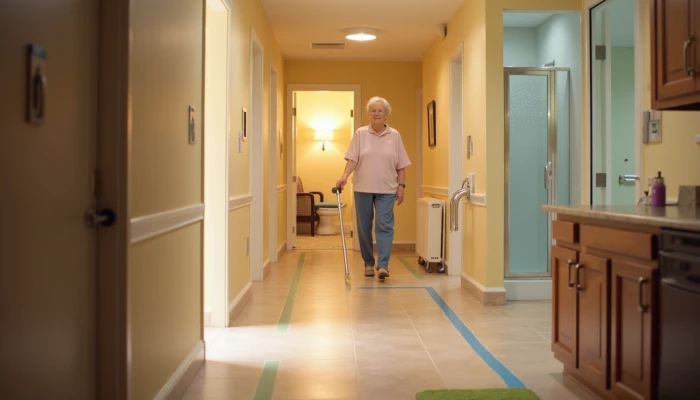
Creating a Dementia-Friendly Home for Safer Daily Living
When a family is supporting someone with dementia at home, safety concerns often show up in ordinary routines: getting to the bathroom, finding the kitchen, using stairs, or moving around at night. The goal is not to create a perfect house or remove every risk. It is to make daily living easier to understand and safer to navigate.
A dementia-friendly home usually works best when changes are simple, visible, and matched to the person's current abilities. Research and caregiver guidance commonly point to the same themes: reduce hazards, improve orientation, simplify tasks, and make important features easier to see and reach.
That approach supports aging at home in a practical way. It can help preserve independence and dignity, while also making caregiving less reactive. The steps below follow a room-by-room plan so families can start with the highest-risk areas first.
Key Principles of Dementia-Friendly Home Modifications
A helpful home setup for dementia usually starts with fewer obstacles and clearer visual information. Cognitive changes can affect judgment, depth perception, attention, and the ability to follow multi-step tasks. That means a space that once felt familiar may become harder to use safely.
Start with the basics.
- Remove tripping hazards such as loose rugs, cords across walkways, unstable furniture, and clutter on the floor.
- Keep walking paths wide and easy to follow from room to room.
- Store everyday items in consistent places so routines are easier to maintain.
Visual contrast can also help. Installing contrast markers on stair edges, door frames, light switches, and furniture edges may make important boundaries easier to notice. A dark strip on a light stair edge, for example, can be easier to see than a stair with no contrast at all.
Task simplification matters too. Instead of relying on memory, use clear labels, pictures, or simple visual cues. This can help with drawers, cabinets, laundry areas, and bathroom storage.
A simple way to prioritize changes is to walk through the home and ask:
- What could cause a trip, slip, or confusion today?
- What is hard to see, identify, or reach?
- What routine seems to require too many steps?
That process helps families focus on practical improvements instead of trying to change everything at once.
Entryway and Common Area Adjustments
Entryways, hallways, and living areas are high-traffic spaces, so small barriers can create repeated problems. Steps at the front door, uneven thresholds, dim corners, and unclear room layouts can all increase confusion or make movement less steady.
If there are small steps inside or outside the home, threshold ramps may improve access. This can be especially useful when the person also uses a cane, walker, or other mobility support. Any ramp or structural change should be installed safely and, when needed, reviewed by a qualified professional.
Lighting is another priority. Add lighting along pathways, near stairs, and at entrances so transitions between spaces are easier to read. Try to reduce glare and deep shadows, which can be disorienting.
Signage can make common areas more usable. Large, simple labels on doors can help identify rooms such as the bathroom, kitchen, or bedroom. In some homes, adding both words and pictures is more helpful than words alone.
Use this quick walkthrough for common areas.
- Check for loose rugs and low furniture that may blend into the floor.
- Make sure stair edges are visible with contrast markers.
- Improve lighting at the front door, hallway turns, and stair landings.
- Label important rooms clearly.
- Keep keys, glasses, and other essentials in one visible, consistent location.
These changes do not remove every risk, but they can make everyday navigation more predictable.
Bathroom Safety Enhancements
Bathrooms often need attention early because water, hard surfaces, and rushed transfers can create multiple risks at once. For many families, this is one of the most important places to improve bathroom safety for seniors while also considering the added confusion dementia can bring.
Grab bars for seniors are often used near the toilet, inside the shower, and at the tub entry. Placement matters more than simply adding hardware, so it helps to think through the exact movements the person makes during toileting and bathing.
Other practical changes include non-slip mats, better lighting, and easier shower access. Some households also consider a shower modification or tub replacement when stepping over a high tub wall becomes difficult. A shower chair for seniors may support seated bathing when standing for the full task is no longer realistic.
If the bathroom layout allows, lower sink or countertop heights may improve access, especially when mobility limitations are also present.
A simple bathroom checklist can help families decide what to address first.
| Area | What to check | Why it helps |
|---|---|---|
| Toilet area | Grab bars, clear floor space, visible toilet seat | Supports transfers and orientation |
| Shower or tub | Non-slip surface, grab bars, shower seating | Reduces slipping risk during bathing |
| Sink | Easy-to-reach supplies, simple layout | Makes grooming tasks easier to complete |
| Lighting | Bright, even light without glare | Improves visibility and reduces confusion |
| Water temperature | Temperature-regulating controls if needed | Helps lower burn risk |
The safest setup depends on the person's balance, judgment, and bathing routine. If transfers are becoming difficult, it may be time to ask an occupational therapist or home safety professional for guidance.
Kitchen and Living Space Adjustments
The kitchen supports independence, but it also contains sharp tools, heat, and cleaning products. A dementia-friendly setup should make common tasks easier while limiting access to items that could cause harm if used incorrectly.
Store frequently used dishes, cups, snacks, and utensils at eye level. This reduces bending, reaching, and searching. Keep the layout simple and avoid overfilling cabinets or drawers.
Labels can help here too. Use clear, easy-to-read words and, if useful, pictures on cabinets, pantry shelves, and appliances. The goal is not to label everything. It is to label the items and spaces that support daily routines.
Sharp objects, matches, and hazardous materials should be sed. Cleaning products, medications, and potentially dangerous kitchen tools are often better kept in locked or restricted cabinets.
In the living area, reduce visual overload where possible. Too many objects, patterns, or competing storage spots can make it harder to locate important items. At the same time, avoid stripping the room of familiar belongings that provide comfort and recognition.
A balanced approach often works best.
- Keep favorite chairs, blankets, and familiar photos visible.
- Remove unstable side tables or cluttered pathways.
- Store dangerous items out of sight and sed.
- Use simple labels for the most-used storage areas.
- Keep remote controls, phones, and glasses in consistent places.
The aim is a space that feels familiar, not institutional.
Bedroom and Nighttime Safety
Nighttime can be especially challenging for a person with dementia. Low light, sleep disruption, and disorientation may make it harder to find the bathroom, recognize surroundings, or move safely after waking.
Start with the path from the bed to the bathroom. Nightlights near the bed, along the hallway, and at the bathroom entrance can make that route easier to follow. Try to keep the path clear and consistent.
Flooring should be stable and non-slip. Soft surfaces can be helpful, but avoid anything that bunches, curls, or creates an uneven edge. Loose bedside rugs are often more risky than helpful.
Clutter is another common issue. Keep the bedroom calm and easy to move through, with only the furniture and items needed for comfort and routine. A crowded room can increase confusion, especially at night.
A simple nighttime setup may include:
- A clear path from bed to bathroom
- Nightlights in key transition points
- A lamp or switch that is easy to find
- Stable footwear within reach if the person gets up
- Frequently used items, such as glasses or tissues, in the same place each night
If wandering, repeated nighttime falls, or severe sleep disruption are becoming common, home changes alone may not be enough. That is a good point to bring in professional support.
Additional Considerations for Safety
Some important safety issues are easy to miss because they are not tied to one room alone. These include access to medications, water temperature, and the ability to call for help.
Safety locks on cabinets can help limit access to medications, cleaning supplies, and other hazardous items. This is especially important if the person is still independently opening drawers and cabinets but may no longer recognize what is safe to use.
Temperature control also matters. People living with dementia may have trouble judging whether water is too hot or a room is too cold. Temperature-regulating devices for water and heating can reduce some everyday risks, especially in bathrooms and kitchens.
Emergency communication should be simple and visible. A phone, call button, or other alert option should be easy to reach and easy to identify. If the person lives alone for part of the day, caregivers may also want to review whether additional monitoring or check-in systems are appropriate.
Use this implementation sequence if you are not sure where to start.
- Fix immediate hazards such as loose rugs, poor lighting, and unsed toxic items.
- Improve visibility with labels and contrast markers.
- Make bathrooms and nighttime routes easier to use.
- Simplify storage and daily task areas.
- Reassess every few months as needs change.
Dementia changes over time, so the home setup may need to change too. A useful modification today may need to be adjusted later as mobility, memory, or judgment shifts.
Conclusion
A safer home for someone with dementia is usually built through small, thoughtful decisions rather than one major fix. Removing tripping hazards, installing contrast markers, improving bathroom access, simplifying storage, and supporting nighttime movement can all make daily life easier to manage.
The best plan is personal. It should reflect the person's symptoms, routines, mobility, and the layout of the home. These changes can support independence and dignity, but they do not replace medical care, supervision, or hands-on help when those are needed.
If you are unsure which changes matter most, consider asking an occupational therapist or qualified home safety professional for an assessment. That kind of guidance can help families focus on the modifications most likely to improve day-to-day safety and comfort.