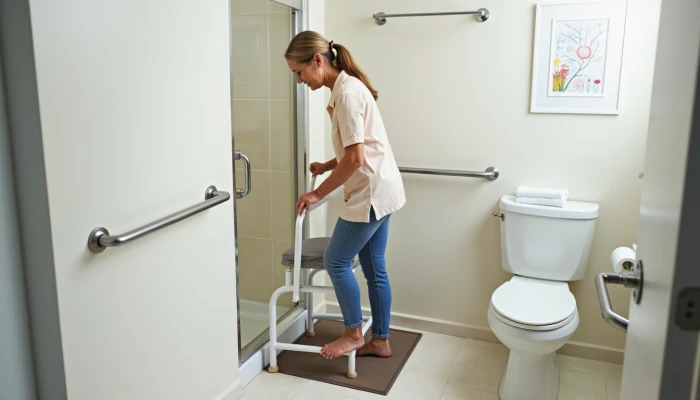
Simple Home Changes That Can Make Moving Around Safer
Limited mobility can turn ordinary parts of a home into daily obstacles. A small threshold, dim hallway, or slippery bathroom floor may not seem serious at first, but these details can make walking, transferring, and using mobility aids harder than they need to be.
The goal of home safety for seniors is not to create a perfect home or remove every risk. It is to make common activities easier and safer, while supporting comfort and independence. For many families, that starts with a few practical changes in the areas where movement is most difficult.
This guide focuses on realistic steps you can take at home, especially if mobility changes from day to day. Some people may walk well in the morning and struggle more at night, or do fine on flat surfaces but need extra support in the bathroom. That is why the safest plan is usually one built around daily routines, not just a general checklist.
Key Home Modifications for Seniors with Limited Mobility
When mobility is limited, the most helpful home changes are often the simplest. Start by looking at the places where standing up, turning, stepping over edges, or walking with a cane or walker feels awkward.
Bathrooms and entryways usually deserve attention first, but hallways, bedrooms, and living areas matter too. The main goal is to reduce the need for sudden balance corrections.
A practical starting checklist includes the following.
- Install grab bars in places where transfers happen, such as near the toilet, inside the shower, and at the tub entry.
- Remove loose rugs, trailing cords, small furniture, and clutter from walking paths.
- Address uneven thresholds or raised transitions that can catch a foot, cane tip, or walker.
- Rearrange furniture so hallways and doorways stay clear and easy to navigate.
- Check whether frequently used chairs and beds are easy to get in and out of without deep bending or twisting.
Installing grab bars is one of the most commonly recommended safety changes because they provide stable support during high-risk movements. Placement matters. A bar should help with a real movement pattern, such as sitting down, standing up, or stepping into a shower, rather than being added wherever there is open wall space.
Just as important, grab bars should be installed sely. In practice, safe installation guidance commonly emphasizes anchoring them properly and using a qualified installer when needed, especially in tiled bathrooms or older homes.
Removing tripping hazards is another high-value step because it improves safety right away without changing how the home feels. Even a well-placed mobility aid is less useful if the floor is crowded or the route between rooms is narrow.
If you are not sure where to begin, walk through the home during a normal day and watch for moments where the person pauses, reaches for furniture, sidesteps objects, or avoids a room. Those are often the clearest signs of where a modification will help most.
Use this quick priority table to decide what to fix first.
| Area or issue | Why it matters | Good first step |
|---|---|---|
| Loose rugs or cords | Can catch feet or mobility aids | Remove or se them |
| Narrow walkways | Makes turning and passing harder | Move furniture to widen paths |
| Bathroom transfers | Standing and turning increase risk | Add properly placed grab bars |
| Raised thresholds | Can cause trips during transitions | Mark, reduce, or professionally modify |
| Clutter near seating | Makes sit-to-stand movement harder | Clear space beside chairs and beds |
These changes do not eliminate fall risk, but they can make daily movement more predictable and less tiring.
Lighting and Environmental Adjustments
Good lighting supports safer movement, especially for people who move slowly, shuffle, use a walker, or need extra time to adjust when entering a room. Poor visibility can make it harder to judge floor changes, see edges, or notice objects left in a pathway.
Improving lighting does not always mean making a room harshly bright. The goal is even, usable light with as little glare as possible.
Focus first on these areas.
- Hallways and routes between the bedroom and bathroom
- Staircases and landings
- Entry doors and thresholds
- Bathrooms, especially near the toilet and shower
- Kitchens, where shadows can hide spills or floor clutter
Motion-sensor lights can be especially helpful for nighttime navigation. They reduce the need to search for switches in the dark and can support safer trips to the bathroom. Bedside lamps, illuminated switches, and night-lights can also help, as long as they do not create glare or confusing shadows.
Flooring and visual contrast matter too. Very dark flooring, highly reflective surfaces, or busy patterns may make it harder for some older adults to judge depth or distinguish edges. For someone with fluctuating mobility, hesitation caused by poor visual cues can be enough to increase the chance of a misstep.
A simple room-by-room review can help you spot problems.
- Turn on the lights at the same time of day the room is usually used.
- Stand at the doorway and look for dark corners, glare, or shadows across walking paths.
- Check whether switches are easy to reach before entering the room.
- Walk the route with any cane, walker, or other mobility aid that is regularly used.
- Note places where flooring changes suddenly or where objects blend into the floor color.
Environmental adjustments should also support the way the person actually lives. For example, if they often carry laundry, use the bathroom several times overnight, or rest in a recliner during the day, those routes should be lit especially well.
In many homes, improving lighting is one of the least disruptive safety changes. It can be done gradually, room by room, and paired with decluttering and layout changes for better results.
Bathroom Safety Upgrades
Bathrooms are one of the most important places to focus because they combine water, hard surfaces, tight turns, and frequent transfers. A person may need to step over a tub wall, lower themselves onto a toilet, or stand on one foot while drying off. For someone with limited mobility, that can be a difficult sequence even on a good day.
Start with surfaces and support.
- Add non-slip mats or slip-resistant flooring in wet areas.
- Install grab bars near the toilet and bathing area.
- Keep towels, soap, and other daily items within easy reach.
- Remove low storage bins or decorative items that crowd the floor.
- Make sure the bathroom door and interior space allow enough room for a walker if one is used.
For families researching bathroom safety for seniors, it helps to think in terms of tasks rather than products. The key questions are: Can the person get in, turn, sit, stand, and exit without needing to grab unstable surfaces?
Shower chairs for seniors may also be worth considering when standing for the full shower is tiring or unsteady. A seated option can reduce strain during bathing, but it still needs enough space around it for safe entry and exit. It should fit the person and the shower layout, not just the available floor area.
If a bathroom needs more than small adjustments, a larger layout change may be worth exploring. In some homes, replacing a standard tub with a walk-in shower or walk-in tub can reduce the difficulty of stepping over a high edge. That said, these are bigger decisions involving cost, space, and installation needs, so they are usually best considered after reviewing current mobility and transfer ability.
When planning grab bars for seniors, placement and height should match the movement being supported. Practical installation guidance often notes that bathroom grab bars are commonly placed within a range around 33 inches to 3 feet from the floor, but exact placement should still fit the user, the wall structure, and the transfer task.
Use this bathroom check to identify the most urgent upgrades.
| Bathroom task | Common problem | Safer adjustment |
|---|---|---|
| Sitting on or rising from toilet | No stable handhold | Install grab bars nearby |
| Entering shower or tub | Slippery step or high edge | Add non-slip surface and support bar |
| Standing during shower | Fatigue or balance loss | Consider a shower seat if appropriate |
| Reaching soap or towels | Twisting or overreaching | Move items to easy-access storage |
| Nighttime bathroom use | Dim route from bedroom | Improve lighting and add motion-sensor lights |
If one room gets attention first, the bathroom is often the best place to start. Small changes there can make one of the most demanding daily routines more manageable.
Conclusion
The safest home setup is usually built step by step. Instead of trying to change everything at once, focus on the places where limited mobility creates the most strain during everyday routines.
Start with the basics: clear walking paths, better lighting, and stable support in the bathroom. Then reassess. If a person still struggles with transfers, turning, or bathing, it may be time to consider larger home modifications for seniors.
When needs are complex, a professional home safety assessment can help. An occupational therapist or qualified home safety specialist can look at how the person moves through the space and suggest changes that fit their actual routines.
The goal is not to promise perfect safety. It is to make the home easier to use, more comfortable to move through, and better suited to changing mobility over time.