The Everyday Home Problems That Can Make Aging in Place Harder
Aging at home often works best when families focus on ordinary problems before they become bigger ones. Many safety risks are not dramatic. They are the daily issues that slowly make walking, bathing, cooking, and getting around the house more difficult.
For caregivers and older adults, the challenge is not just knowing that falls and injuries can happen. It is knowing where to look, what to change first, and which improvements are realistic on a budget. Public health guidance on older adult falls and aging-in-place planning commonly points to the same pattern: small hazards add up.
This guide walks through the most common home safety concerns, room by room, and offers practical next steps. It also includes a simple checklist you can use to decide which fixes to handle first and when it may be time to bring in a qualified professional.
Key Areas of Risk: Room-by-Room Safety Hazards
Many homes were not set up with changing balance, strength, vision, or mobility in mind. That does not mean an older adult cannot live there safely. It does mean the home should be reviewed with daily routines in mind.
The bathroom is often one of the first places families notice problems. Wet floors, hard surfaces, low toilets, and the need to step in and out of a tub or shower can all raise risk. A lack of stable support near the toilet or bathing area can make transfers harder. Bathroom safety guidance often emphasizes se grab bars, better traction, and easier entry rather than relying on towel bars or loose bath mats.
The kitchen can create a different set of problems. Poor lighting makes it harder to see spills, labels, and stove controls. Cluttered counters and crowded walkways can force awkward reaching or carrying. Frequently used items stored too high or too low may increase the need for step stools or deep bending, both of which can be risky for some older adults.
Stairs and entryways deserve close attention. Uneven steps, worn flooring, weak lighting, missing handrails, and objects left on stairs can turn a routine trip into a serious hazard. Guidance on aging in place regularly points to stair safety as a priority because stairs combine balance, strength, vision, and attention demands all at once.
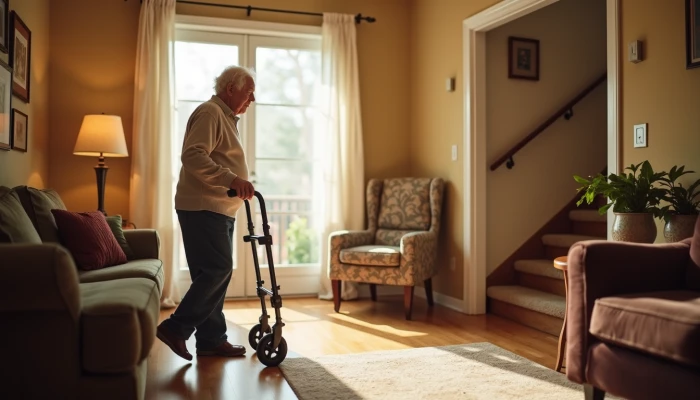
Bedrooms and main living areas also matter. Loose rugs, extension cords, unstable furniture, and narrow walking paths can create tripping hazards, especially for someone who gets up at night. If an older adult uses a cane, walker, or rollator, even small obstacles can reduce safe movement through the room.
A simple walk-through can help you spot patterns. Use this checklist as a starting point.
- Check whether floors stay dry and slip-resistant in bathrooms, kitchens, and entries.
- Look for places where an older adult reaches for support but has nothing sturdy to hold.
- Notice whether lighting is dim in hallways, stairways, bathrooms, and bedside areas.
- Remove clutter from walking paths, especially between the bed, bathroom, kitchen, and exits.
- Check stairs for se handrails, visible step edges, and items left on steps.
- Review storage so everyday items are easy to reach without climbing or deep bending.
- Watch one normal routine, such as making breakfast or getting into the shower, to see where movement looks unsteady or rushed.
If you are building a home safety checklist for elderly parents, focus first on the places used every day. The goal is not to make the house perfect. It is to make the most common tasks safer and easier.
Cost-Effective Solutions for Everyday Hazards
Not every problem requires a major remodel. In many homes, the first improvements are simple, affordable, and high impact. The key is to match the fix to the actual risk instead of trying to change everything at once.
Start with lighting. Brighter bulbs, better placement, and easy-to-reach switches can improve visibility in hallways, bathrooms, kitchens, and stairs. Night-lights along the path from bed to bathroom may also help with nighttime navigation.
Next, reduce slipping and tripping hazards. That may mean removing loose rugs, securing cords against walls, clearing walkways, and choosing non-slip surfaces where moisture is common. In bathrooms, traction matters more than decoration. In living spaces, open walking paths matter more than extra furniture.
Organization can also improve safety without much cost. Move daily-use items to waist or shoulder height. Keep medications, dishes, clothing, and toiletries where they can be reached without climbing. Store heavier items in easy-access locations. These changes support independent living for seniors by reducing strain during ordinary tasks.
When money is limited, it helps to prioritize changes by risk and frequency. This simple table can help.
| Area or issue | Why it matters | Lower-cost first step |
|---|---|---|
| Wet bathroom floor | Slipping risk during bathing and toileting | Add non-slip surface and improve towel placement to keep floors drier |
| Dim hallway or stairs | Harder to judge distance and obstacles | Add brighter bulbs or night-lights |
| Loose rugs or cords | Common tripping points | Remove rugs or se cords along walls |
| Hard-to-reach storage | Encourages climbing or overreaching | Reorganize frequently used items to easy-reach shelves |
| Cluttered pathways | Limits safe use of canes or walkers | Clear a wide path between key rooms |
| Missing support near toilet or shower | Transfers may feel unstable | Plan for properly installed support features |
A practical order of operations often looks like this.
- Fix hazards that could cause an immediate fall, such as loose rugs, clutter, or poor stair lighting.
- Improve the bathroom, since it combines water, hard surfaces, and transfers.
- Reorganize the kitchen and bedroom around daily routines.
- Reassess whether larger changes are still needed after the simpler fixes are in place.
This kind of aging parent checklist can keep families from overspending too early. It also helps avoid the opposite problem: delaying obvious fixes because a full renovation feels too overwhelming.
Cost-conscious does not mean cutting corners on safety-critical work. If a change involves structural support, electrical work, or anything that must be sely installed, it is better to plan carefully and use qualified help where needed.
When to Seek Professional Home Safety Assessments
Some hazards are easy to spot. Others are tied to how a person moves through the home, transfers in and out of chairs, manages stairs, or uses mobility aids. That is where a professional home safety assessment can be useful.
A trained specialist may notice problems families miss, such as doorway clearance issues, unsafe bathroom layouts, poor placement of support features, or room arrangements that do not work well with a walker or reduced balance. Aging-in-place guidance commonly recommends professional input when mobility changes are affecting daily routines or when families are considering more than a few small fixes.
A professional assessment may be especially helpful if:
- There has already been a fall or near-fall at home.
- The older adult is avoiding parts of the house, such as stairs or the shower.
- A cane, walker, or wheelchair is being used in tight spaces.
- Family members disagree about what changes are necessary.
- You are considering larger modifications and want to prioritize wisely.
Depending on the situation, useful professionals may include an occupational therapist, an aging-in-place specialist, or a home safety professional with experience in accessibility and senior home safety. The right fit depends on whether the main issue is function, layout, remodeling, or a combination of those.
During an assessment, ask practical questions.
- Which hazards are the highest priority right now?
- Which changes are likely to help daily routines the most?
- What can be done now at lower cost?
- Which upgrades require licensed installation or remodeling?
- How should the plan change if mobility declines later?
This step is not about giving up independence. It is about making better decisions with clearer information. For many families, professional guidance helps turn a vague sense of worry into a realistic action plan.
If you are creating a senior fall prevention checklist, a professional can also help tailor it to the person rather than relying on a generic list. That matters because one home may need better lighting and decluttering, while another may need transfer support, stair changes, or a new room setup.
Conclusion
The most common aging-at-home problems are often the easiest to overlook: poor lighting, slippery surfaces, cluttered paths, difficult transfers, and stairs that no longer match a person's needs. Addressing those issues early can make daily life safer and more manageable.
Start with a simple walk-through and focus on the rooms used most often. Make the affordable changes first, especially where they reduce obvious tripping and slipping risks. Then, if the situation is more complex or larger modifications are being considered, bring in qualified professional guidance.
A safer home does not come from one product or one big project. It usually comes from a series of practical decisions that support comfort, mobility, and independence over time.