Affordable Home Safety Upgrades That Make Aging in Place Easier
Trying to make a home safer for an older adult can feel expensive before you even begin. Many families assume meaningful changes require a full bathroom remodel, a large contractor budget, or specialized equipment in every room. In reality, a lot of useful improvements are smaller, less disruptive, and easier to phase in.
For households focused on home safety for seniors, the goal is usually not to change everything at once. It is to reduce obvious hazards, make daily routines easier, and use available help where possible. That may include utility company discounts, local nonprofit support, or simple DIY-friendly updates that do not alter the whole house.
This guide focuses on budget-conscious, beginner-friendly steps. It also keeps expectations realistic: no single change works for every person, and low-cost upgrades do not replace professional help when a home has major accessibility or repair issues.
A useful way to start is this order of operations.
- Walk through the home and note the places where lighting, slippery surfaces, or awkward movement create problems.
- Fix the lowest-cost, highest-impact issues first.
- Check for rebates, grants, or volunteer repair programs before paying out of pocket.
- Save larger projects for later if smaller changes can improve day-to-day safety now.
Utility Rebates and Grant Programs for Home Safety
Before buying supplies or scheduling work, check whether outside funding can lower the cost. This step is often overlooked, but it can make modest upgrades more manageable.
Some utility companies offer discounts or rebates tied to energy-saving or safety-related improvements, such as brighter LED lighting or leak detection devices. Availability varies by provider and location, so it is worth checking the utility website or calling customer service directly. Ask whether they have programs for older adults, accessibility-related upgrades, or energy-efficiency improvements that also support safer movement at home.
Other programs may help qualifying households with larger safety needs. Depending on eligibility and location, Medicaid waiver programs may cover certain home modifications. Veterans with qualifying service-connected disabilities may also have access to grant programs for adapted housing improvements. These programs usually have rules, paperwork, and approval steps, so it helps to ask early rather than waiting until a project becomes urgent.
Area Agencies on Aging can also be a practical starting point. They often maintain lists of local grants, volunteer repair groups, and community programs that support aging in place. In some areas, they may know about small home repair funds, weatherization support, or nonprofit partners that can help with labor.
If you are comparing options, use a simple funding checklist.
- Call your gas and electric utility and ask about rebates for lighting, sensors, or safety-related upgrades.
- Contact your local Area Agency on Aging for home modification resources.
- Ask whether any nonprofit repair programs serve older homeowners in your area.
- Review long-term care insurance documents, if applicable, for home modification language.
- If the older adult is a veteran, ask about housing adaptation grant eligibility.
This funding-first approach will not cover every project, but it can reduce out-of-pocket costs and help you prioritize what to do now versus later.
DIY-Friendly Safety Upgrades with Minimal Cost
Many of the most practical changes are simple, non-intrusive, and manageable with basic tools. These upgrades are especially useful when you want to improve safety without starting a renovation.
Lighting is often the easiest place to begin. Brighter LED bulbs in stairways, bathrooms, hallways, and entry points can make edges, thresholds, and clutter easier to see. Plug-in nightlights or motion-sensor lights can also help with nighttime trips to the bathroom or kitchen.
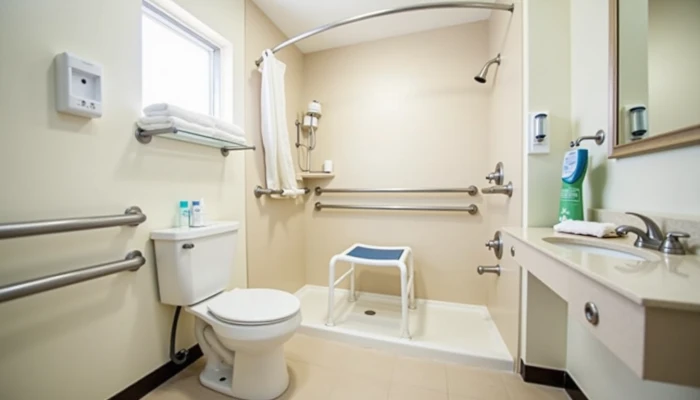
Bathroom updates can also be relatively affordable. For bathroom safety for seniors, low-cost options may include adhesive non-slip mats, a handheld showerhead, and lever-style faucet handles that are easier to operate than small knobs. A shower chair can also support comfort and stability during bathing for some people, though fit and setup matter.
A few low-cost changes are especially useful because they do not require major construction.
- Replace dim bulbs with brighter LED bulbs in high-traffic areas.
- Add plug-in or battery-powered motion-sensor nightlights.
- Use non-slip mats in bathrooms and near entry doors.
- Swap hard-to-turn faucet hardware for lever-style options where feasible.
- Add simple threshold ramps designed for minor height changes.
- Remove or se loose rugs that slide or curl.
If you want a step-by-step starting plan, try this sequence.
- Walk through the home during the day and again at night.
- Mark dark areas, slippery spots, and places where the person steadies themselves on furniture or walls.
- Start with lighting, loose rugs, and bathroom traction.
- Test each change for a few days before adding more.
- Keep notes on what feels easier, what still causes hesitation, and where more support may be needed.
Stay within safe DIY limits. Adhesive items, bulbs, nightlights, and simple hardware swaps may be manageable for many households. Electrical work, structural changes, or projects involving load-bearing support should be left to qualified professionals.
Room-by-Room Cost-Effective Modifications
A room-by-room approach helps you avoid overspending on low-priority changes. Focus first on spaces where slips, awkward reaching, or poor visibility are most likely to create problems.
The bathroom is often the first place to improve. Full remodels can be expensive, so it usually makes sense to prioritize targeted upgrades first. Grab bars for seniors are often more useful than decorative towel bars because they are intended to support weight when properly installed. Better lighting, non-slip surfaces, and a lower shower threshold can also make the space easier to use. For some households, shower chairs for seniors may be a practical addition when standing for bathing is tiring or unsteady.
The kitchen often benefits from comfort-focused changes rather than major reconstruction. Replacing small cabinet pulls with easier-to-grip handles can help. Reorganizing frequently used items onto waist-level shelves can reduce reaching and bending. Good task lighting over counters also makes meal prep easier.
Entryways and outdoor approaches deserve attention too. Uneven mats, poor lighting, and clutter near the door can create avoidable hazards. Weather-resistant lighting, a se handrail, and a clear walking path may be more useful than cosmetic updates.
Use this quick planning table to decide where to start.
| Area | Low-cost upgrade | Why it may help |
|---|---|---|
| Bathroom | Properly installed grab bars, non-slip mat, brighter lighting | Supports safer transfers and improves visibility |
| Hallway | LED bulbs, nightlights, clutter removal | Makes nighttime movement easier |
| Kitchen | Easier cabinet hardware, shelf reorganization, task lighting | Reduces awkward reaching and improves daily use |
| Entryway | Outdoor lighting, se mat, clear path | Improves footing and visibility when entering or leaving |
| Bedroom | Lamp within reach, clear path to bathroom, stable rug setup | Supports safer nighttime movement |
The main budget advantage of this approach is focus. Instead of spreading money across the entire house, you can improve the highest-risk rooms first and delay lower-priority projects until later.
Leveraging Community and Nonprofit Resources
If your budget is tight, community support may be just as important as DIY changes. Many families do not realize that local organizations sometimes help with labor, materials, referrals, or application guidance.
Nonprofits such as Rebuilding Together and similar local repair groups may offer free or reduced-cost home repairs for eligible older adults. Services vary, but they can include basic safety repairs, accessibility improvements, and home maintenance tasks that become harder with age.
Area Agencies on Aging are also useful because they can help connect families with the right local programs instead of making them search one by one. In some communities, they may know about volunteer handyman services, transportation-related home access programs, or local grants tied to aging in place.
Some households may also have partial coverage through long-term care insurance. Policies differ widely, so it is important to review the actual terms rather than assuming home modifications are included. If there is coverage, ask what kinds of changes qualify, whether prior approval is needed, and what documentation is required.
When reaching out for help, gather the basics first.
- Proof of identity
- Proof of income, if the program is income-based
- Homeownership or housing documents
- A short list of the safety issues you want to address
- Photos of the problem areas, if allowed
This preparation can make calls and applications easier. It also helps you compare programs more clearly. One group may help with labor, another with materials, and another with referrals to licensed contractors.
Community support will not solve every home access issue, but it can make modest safety improvements more affordable and less overwhelming for caregivers and older adults alike.
Conclusion
Making a home safer does not always require a major renovation. In many cases, a series of smaller changes can improve comfort, visibility, and day-to-day ease while keeping costs more manageable.
The most practical path is usually to start with high-impact basics like lighting, bathroom traction, clutter reduction, and se support features, then look for utility company discounts, nonprofit help, or grant programs before moving on to larger projects.
For families working through home safety for seniors on a budget, the key is steady progress rather than perfection. A simple plan, room-by-room priorities, and realistic use of outside resources can make aging in place feel more workable without overspending.
If a home has major structural barriers or the older adult has complex mobility needs, it may be worth adding a professional home safety assessment to guide the next steps.