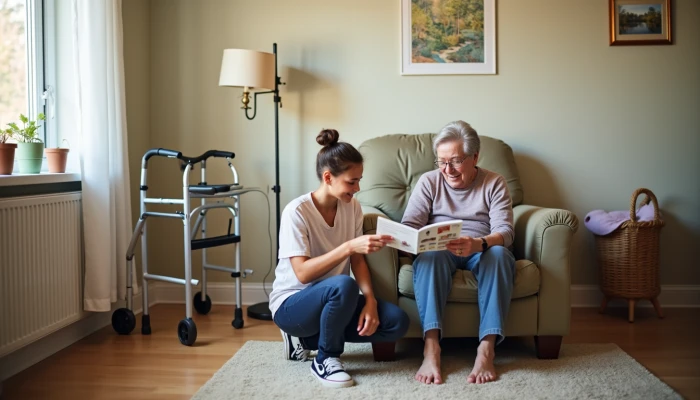
When an Aging Parent Says No to Home Changes
It is common for older adults to push back when family members suggest changes at home. Even small updates can feel personal. A grab bar in the bathroom or brighter hallway lighting may seem helpful to you, but to an aging parent it may feel like proof that other people no longer trust their judgment.
That tension can leave caregivers stuck between two valid goals: keeping a loved one safer and respecting their right to make choices in their own home. The good news is that this does not have to become a power struggle.
A better approach is to treat home changes as part of aging in place planning, not as a takeover. When safety improvements are presented as tools that make daily life easier, steadier, and more manageable, they are often easier to discuss. This guide walks through why resistance happens, how to introduce changes step by step, and what emotional support can help the conversation go better.
Understanding the Emotional Roots of Resistance
Resistance is not always about the specific change. Often, it is about what the change seems to mean. An aging parent may hear, "You are not safe," when you think you are saying, "I want to help you stay comfortable here longer."
For many older adults, the home represents competence, routine, privacy, and identity. Changes to that space can feel like a loss of control. If your parent has lived independently for years, even a simple suggestion can sound like a challenge to their ability to manage.
Common emotional reasons for resistance include:
- fear of losing independence
- worry about being treated like a patient instead of an adult
- concern about cost or disruption
- embarrassment about needing help
- fear that one change will lead to bigger unwanted changes later
- frustration at being told what to do in their own home
This is why framing matters. If the conversation focuses only on danger, your parent may feel cornered. If it focuses on preserving choices, it may feel more respectful. Instead of saying, "You need this because you might fall," try language that connects the change to control and ease, such as, "This could make it easier to keep using this bathroom comfortably."
A practical mindset shift is to treat safety changes as independence support. Bathroom safety for seniors, for example, is not only about reducing hazards. It can also mean making bathing less tiring, less awkward, and more manageable without needing someone else nearby.
Before suggesting solutions, try to understand what your parent is protecting. It may be privacy. It may be pride. It may be the fear that accepting one change means admitting decline. When you understand that emotional layer, your response becomes less confrontational and more useful.
A few conversation principles can help:
- ask before advising
- listen for the meaning behind the objection
- avoid correcting every concern in the moment
- focus on one issue at a time
- connect the change to a goal your parent already values
If your parent says, "I do not want my house to look like a hospital," that is not just a design comment. It is a statement about dignity. Responding to that concern directly is often more effective than repeating the safety argument.
Practical Strategies for Introducing Changes
Once you understand the emotional resistance, the next step is to lower the pressure. Large, sudden plans often trigger more pushback than steady, collaborative changes.
A simple way to begin is to start small. Low-impact updates can show immediate value without making the home feel dramatically different. Common examples include better lighting, removing loose trip hazards, improving stair visibility, or adding grab bars for seniors in places where balance is already a concern.
Research and implementation guidance on home modifications commonly point to targeted changes in mobility, lighting, and bathroom areas as especially relevant for safer daily living. That does not mean every home needs the same updates. It means starting with the places where routine tasks already feel harder.
Use this step-by-step approach.
- Pick one daily frustration or near-miss.
- Ask how your parent experiences that task.
- Suggest one small change tied to comfort or ease.
- Let them help choose placement, style, or timing.
- Revisit after a short period and ask what feels better or still annoying.
- Only then discuss the next change.
This sequence works because it builds trust. It also helps avoid the feeling that a full home overhaul is being imposed all at once.
Here is a practical way to frame common suggestions.
| Home change | High-pressure framing to avoid | Better independence-focused framing |
|---|---|---|
| Grab bars near the toilet or shower | "You need these because you are unsafe." | "These can make it easier to steady yourself without needing help." |
| Brighter lighting in halls or stairs | "You cannot see well enough anymore." | "This may make nighttime trips easier and less frustrating." |
| Shower chairs for seniors | "You should sit because standing is risky." | "This can make showers less tiring on low-energy days." |
| Removing loose rugs | "These are dangerous and have to go." | "Could we move this one and see if walking through here feels easier?" |
When possible, involve your parent in decisions that are visible and personal. Ask questions like:
- "Which bathroom feels hardest to use?"
- "Would you rather start with lighting or the shower area?"
- "What would make this feel less intrusive?"
- "Do you want to try one change first and see how it goes?"
That sense of ownership matters. People are more likely to accept changes they helped shape.
It can also help to separate urgent issues from optional upgrades. If there is a clear hazard, such as a broken handrail or poor stair lighting, say so calmly and specifically. But avoid turning every preference into a safety emergency.
A short home-change checklist can keep the process practical.
- Identify one room where daily tasks already feel harder.
- Note one specific problem, such as stepping into the tub or walking to the bathroom at night.
- Choose one modest change that supports independence.
- Ask for input on timing, appearance, and setup.
- Try the change before proposing larger updates.
- Reassess together after use.
If bathroom tasks are becoming difficult, start there. Bathroom safety for seniors often feels more acceptable when the goal is privacy and self-sufficiency. Grab bars for seniors and shower chairs for seniors may be easier to discuss when presented as ways to keep bathing independent, not as signs that someone has become incapable.
If your parent resists every idea, slow down. Pushing harder can make agreement less likely. A pause, followed by a more specific and respectful conversation, is often more productive than trying to win the argument in one sitting.
Emotional Support Strategies for Seniors
Even well-chosen home changes can bring up grief, frustration, or embarrassment. That emotional side deserves attention. If your parent feels unheard, the practical plan may stall no matter how reasonable it seems.
Start with active listening. That means reflecting the concern before solving it. For example: "It sounds like you are worried this is the first step toward losing control of your home." A response like that can lower defensiveness because it shows you are hearing the fear, not just the objection.
Validation does not mean agreeing that no change is needed. It means acknowledging that change is hard. You can say:
- "I understand why this feels personal."
- "You have managed this home for a long time."
- "I do not want to make decisions over your head."
- "My goal is to help you stay comfortable here, not take choices away."
It may also help to use examples carefully. You do not need dramatic stories. A simple point is enough: many older adults make small home adjustments so they can keep doing things on their own for longer. That keeps the focus on adaptation, not decline.
If conversations keep becoming tense, a neutral third party may help. An occupational therapist or other qualified professional can look at daily routines and suggest practical changes in a less emotionally loaded way. Sometimes parents hear the same idea differently when it comes from someone outside the family.
Consider asking for outside input when:
- your parent sees every suggestion as criticism
- family conversations quickly turn into arguments
- you are unsure which changes are most important
- daily tasks are becoming harder but your parent minimizes the difficulty
Emotional support also includes pacing. Too many conversations too quickly can feel like pressure. Give time for adjustment. One accepted change can make the next one easier.
Finally, keep dignity at the center. Avoid talking about your parent as if they are not present. Avoid making decisions in advance and presenting them as final. And avoid using fear as the main motivator. Respectful communication is not just kinder. It is often more effective.
The goal is not to force agreement on every point. The goal is to create enough trust that safety discussions can continue without damaging the relationship.
Conclusion
When an aging parent resists home changes, the real issue is often bigger than the modification itself. It may be about control, identity, privacy, or fear of what the change represents.
That is why patience matters. Small steps, clear communication, and genuine collaboration usually work better than pressure. Framing safety updates as tools that support independence can make the conversation feel less like a loss and more like a plan for staying at home with greater comfort and confidence.
You do not need to solve everything at once. Start with one concern, one conversation, and one practical change that your parent can help choose. That approach will not remove every disagreement, but it can make safer aging in place feel more respectful and more possible.