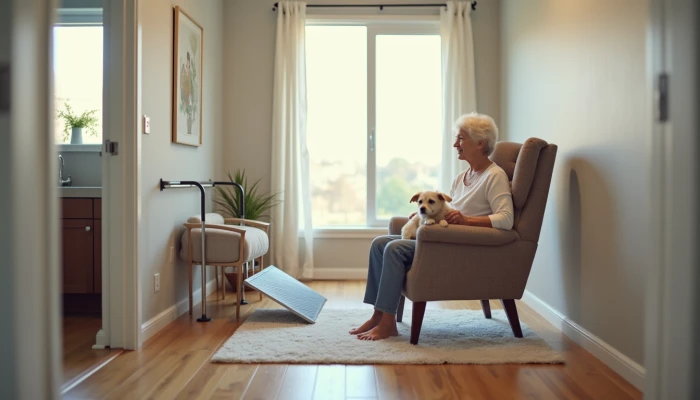
Keeping a Pet at Home as Care Needs Change
Pets can bring comfort, routine, and companionship to daily life. For many older adults, that bond is part of what makes aging at home feel worthwhile and familiar.
At the same time, pet care can become harder as mobility, balance, strength, vision, or memory change. Bending to fill bowls, stepping around toys, managing walks, or remembering feeding and medication schedules can create strain for both the person and the animal.
The goal is not to choose between safety and companionship. In many homes, a better approach is to adjust routines, reduce avoidable hazards, and involve family or professional support when needed. With thoughtful planning, senior home safety can include the practical realities of living with a pet.
The Emotional and Physical Benefits of Pet Companionship for Seniors
Pet companionship can support emotional well-being in ways that matter during aging in place. Source-backed guidance on seniors and pets commonly points to reduced loneliness, improved mood, and a stronger sense of daily purpose. Even simple routines like feeding a cat in the morning or taking a short dog walk can help structure the day.
That structure can be valuable for both seniors living alone and family caregivers trying to keep routines consistent. A pet may encourage regular wake times, light movement, and attention to the home environment. For some households, caring for an animal also reinforces the importance of keeping walkways clear, storing supplies in easy-to-reach places, and staying on top of basic home safety habits.
The benefits are real, but they work best when pet care matches the person's current abilities. A routine that once felt easy may need to be simplified over time. That does not mean giving up a pet right away. It often means looking honestly at which tasks still feel manageable and which ones now need support.
A simple way to think about the value of pet companionship is this:
- Emotional comfort from daily contact and affection
- Gentle routine and structure built into the day
- Motivation for light activity when appropriate
- A continued sense of responsibility and connection at home
These benefits do not erase safety concerns, but they help explain why many families want to preserve the relationship whenever possible.
Common Pet-Related Home Safety Risks for Aging Adults
Pet ownership can add everyday hazards that become more important as balance, reaction time, or memory change. The most obvious risk is falling. Pets may move quickly underfoot, stop suddenly in hallways, or leave toys, bowls, leashes, or litter supplies in walking paths.
Some tasks are also physically demanding. Reaching floor-level food dishes, lifting bags of food or litter, cleaning accidents, bathing a pet, or handling waste outdoors can strain the back, knees, shoulders, and hands. If a senior already uses a cane, walker, or other senior mobility aids, pet-related tasks may become even more awkward.
Cognitive changes can create a different set of problems. A person may forget whether the pet was fed, miss grooming or medication routines, leave doors open, or become overwhelmed by multiple care steps. That can affect both home safety and the animal's well-being.
Certain rooms deserve extra attention. For example, bathroom safety for seniors matters if a pet follows its owner into a small, slippery space. Wet floors, rugs that shift, and crowded pathways can make it harder to move safely. In some homes, grab bars for seniors near the toilet or shower entry improve stability during daily routines, especially if a pet tends to hover nearby. If bathing is tiring, shower chairs for seniors may also reduce strain during personal care, which can make it easier to save energy for pet tasks later in the day.
Use this quick checklist to spot common risks:
- Pet bowls placed in main walkways
- Toys, beds, or scratching posts near doorways or stairs
- Leashes or cords left on the floor
- Slippery flooring where pets run or spill water
- Heavy pet supplies stored too low or too high
- Outdoor pet care tasks that require uneven walking surfaces
- Inconsistent feeding, walking, or medication routines
- No backup plan if the senior becomes ill or cannot leave home
Not every item will apply in every home. The point is to identify where pet care and aging-related changes overlap, then reduce the most immediate risks first.
Occupational Therapy and Home Modification Solutions
When pet care starts to feel harder, an occupational therapist may be able to help break the problem into practical parts. Rather than offering a one-size-fits-all answer, occupational therapy solutions focus on how the person moves through the home, what tasks cause strain, and which adjustments could make those tasks safer.
That might include changing where pet supplies are stored, reducing bending and reaching, simplifying feeding routines, or reorganizing the home so pet-related items are easier to access. The goal is to support independence where possible without assuming that one tool or layout works for everyone.
Home modifications can also reduce day-to-day friction. Implementation guidance commonly emphasizes stable flooring, better lighting, and fewer obstacles in high-traffic areas. If a pet tends to spill water or rush across smooth floors, non-slip surfaces may help reduce slipping risk. In areas where a senior needs extra support, carefully placed handholds or grab bars may improve stability, especially near transitions such as entryways, laundry areas, or bathrooms.
Here is a practical way to match common problems with possible adjustments:
| Pet care challenge | Lower-strain adjustment to consider |
|---|---|
| Bending to fill bowls | Raise feeding supplies to a more accessible height if appropriate |
| Carrying heavy food or litter | Divide supplies into smaller containers |
| Slipping near water bowls | Move bowls away from main paths and use a more stable surface nearby |
| Tripping over toys or beds | Create one designated pet zone outside primary walking routes |
| Forgetting routines | Use a written checklist or simple daily schedule |
| Difficulty with walks | Arrange help for outdoor exercise or bathroom breaks |
A few home setup ideas often help:
- Keep pet stations out of main walking lanes
- Store frequently used items between knee and shoulder height
- Improve lighting in feeding and cleanup areas
- Reduce clutter near doors, stairs, and bathrooms
- Review flooring in places where pets run, spill, or sleep
Some families also use automated feeders or other assistive tools to reduce strain at meal times. These can be helpful in the right situation, but they are not a complete solution on their own. A safe routine still depends on the person's abilities, the pet's needs, and regular review as circumstances change.
Caregiver Support and Emergency Planning for Pet Ownership
Many seniors can keep a pet longer when support is shared. Family members, neighbors, and home care workers may be able to help with tasks that have become difficult, such as lifting supplies, transportation to veterinary visits, dog walking, litter changes, or monitoring whether the routine is being followed consistently.
This is where caregiver planning becomes especially useful. A written plan reduces confusion and makes it easier for someone else to step in without guesswork. It also helps long-distance family members understand what happens each day and where support gaps are starting to appear.
A simple pet care plan should include:
- Feeding times and portion notes
- Walking, litter, or outdoor bathroom schedule
- Medication instructions already provided by the veterinarian
- Location of food, cleaning supplies, leash, carrier, and records
- Emergency contacts for family, neighbors, caregiver support, and the veterinary office
- Notes about the pet's usual behavior and warning signs that something is off
It also helps to assign backup roles clearly.
- Identify who checks on the senior first.
- Identify who checks on the pet if the senior cannot.
- Decide who can provide transportation if needed.
- Keep written instructions in an easy-to-find place.
- Review the plan every few months or after any health or mobility change.
For some households, outside help is the difference between keeping a pet safely and reaching a crisis point. Home care services may assist with routine support, while trusted neighbors can cover short-term emergencies. If the senior is hospitalized or suddenly unable to manage care, having a named backup person matters.
In a small number of situations, families may need to discuss whether pet ownership is still workable. That can be a hard conversation, but it is better handled early and calmly than during an emergency. The focus should stay on safety, consistency, and the well-being of both the person and the animal.
Conclusion
Keeping a pet while aging at home is often possible, but it usually works best when families treat pet care as part of the overall home safety plan. That means looking at fall risks, physical strain, memory demands, and backup support in a realistic way.
Small changes can make a meaningful difference. Clearing walkways, improving lighting, adjusting supply storage, and simplifying routines may help daily life feel more manageable. When tasks are becoming harder, an occupational therapist or qualified home safety professional may be able to suggest practical changes based on the person's abilities and the home's layout.
The most useful plan is one that can change over time. Regularly reviewing routines, supports, and home modifications can help seniors keep the companionship they value while reducing avoidable risks for both themselves and their pets.