Living Safely at Home with Pets as Needs Change
For many older adults, a pet is not just an animal in the house. A pet can provide routine, comfort, and a sense of purpose. That companionship matters, especially for people who live alone or are adjusting to changes in mobility.
At the same time, pets can complicate senior home safety in ways families may not notice right away. A dog weaving around a walker, a cat underfoot at night, spilled water near a feeding area, or toys left in a walkway can all raise the chance of a fall. Pet care tasks can also become harder when bending, lifting, or carrying items is already a challenge.
The goal is not to choose between safety and companionship. In many homes, both can be supported with better layout choices, realistic routines, and help from qualified professionals when needed. The sections below focus on practical steps families can use to make the home safer for an older adult and more workable for the pet too.
Understanding Pet-Related Home Safety Risks for Seniors
Pet-related hazards are often small, everyday issues rather than dramatic dangers. That is exactly why they can be easy to miss. A leash near the door, a toy in the hallway, or a pet that suddenly changes direction can interrupt balance at the wrong moment.
Common risks include tripping over pets, stepping on toys, slipping on water splashed from bowls, and navigating scratched or damaged flooring. These issues can matter even more for someone who already uses a cane, walker, or furniture for support.
Pet care itself can also create strain. Reaching down to fill bowls, carrying food bags, cleaning litter boxes, or bending into tubs during pet bathing may be uncomfortable or unsafe for some older adults.
Watch for these home patterns:
- Feeding bowls placed in narrow walkways
- Toys, beds, or scratching items left near transfer areas
- Leashes or cords hanging near entry points
- Water drips or food crumbs on smooth floors
- Pets that crowd the person during walking, cooking, or bathroom trips
- Nighttime pet movement between the bed and bathroom
Bathroom and bedroom routes deserve special attention. Families often think first about bathroom safety for seniors, but a safe bathroom setup can still be undermined if a pet sleeps outside the door or follows closely during nighttime trips. The same is true in bedrooms, where pet beds, blankets, or low furniture can narrow the path from bed to light switch or bathroom.
A simple first step is to walk through the home at the older adult's usual pace and note where the pet, pet supplies, and daily movement patterns overlap. That often reveals the highest-risk spots quickly.
Professional Home Safety Assessments for Pet-Owner Seniors
A home safety review can be especially helpful when a family is trying to balance the needs of both a person and a pet. Occupational therapists commonly assess how someone moves through the home, where hazards appear during daily tasks, and what changes may improve safety without making the space feel institutional.
For a pet-owning household, that assessment can go beyond standard fall risks. It can include where feeding stations are placed, whether walkways stay clear, how the person manages pet care tasks, and whether the pet's routines create avoidable obstacles.
A professional assessment may look at:
- Walking paths used during the day and at night
- Entryways where pets greet people or pull toward the door
- Bowl placement, litter box access, and storage of pet supplies
- Flooring traction in areas with water, mud, or pet accidents
- Whether mobility aids can move easily around pet beds and stations
- Whether supports such as grab bars for seniors or seating changes would help with nearby tasks
This kind of review can also help families avoid making changes that solve one problem but create another. For example, moving a feeding station out of the kitchen may reduce congestion, but placing it in a hallway could create a new tripping hazard.
If pet care tasks are becoming difficult, an occupational therapist may also help break them into safer steps or suggest simpler routines. That can be useful before a crisis happens, not only after a fall or hospitalization.
Families do not need to wait until the home feels unmanageable. If an older adult has had a near-fall, started using a mobility aid, or is avoiding parts of the home because of the pet, that is a reasonable time to ask for a professional home safety assessment.
Non-Slip Flooring Solutions for Pet-Owner Seniors
Flooring matters because it affects both traction and cleanup. In homes with pets, surfaces may be exposed to water spills, tracked-in dirt, accidents, and claw wear. For older adults, the safest option is usually one that is stable, easy to clean, and not overly slick.
Implementation guidance on flooring for seniors and pet-heavy homes often points to textured vinyl or luxury vinyl plank as practical choices. These surfaces can be easier to clean than carpet, more forgiving around spills than some hard finishes, and smoother for mobility devices than thick rugs.
Loose rugs deserve extra caution. Even when they look harmless, they can bunch, slide, or catch a toe, cane tip, or walker leg. If a rug is important for comfort or traction, it should lie flat and stay sed.
Use this quick comparison when reviewing flooring areas:
| Area | Common pet-related issue | What to look for |
|---|---|---|
| Entryway | Wet paws, leash tangles, dirt | Slip-resistant surface, se mat, enough turning space |
| Kitchen | Water bowl spills, food crumbs | Easy-clean flooring, bowl mat with grip, clear walking path |
| Hallway | Toys or beds in traffic path | Open route, minimal clutter, no curling rug edges |
| Bedroom | Nighttime pet movement | Clear bed-to-bathroom path, stable flooring, good lighting |
| Bathroom | Water plus pet underfoot | Dry floor routine, se mat, enough space for mobility aid |
A few practical steps can make a noticeable difference:
- Place non-slip mats under food and water bowls
- Use washable mats at doors to reduce tracked-in moisture
- Repair or replace flooring that has become uneven or slippery
- Avoid highly polished surfaces in main walking routes
- Keep transitions between rooms as smooth as possible
If the older adult already has bathroom supports such as shower chairs for seniors, review the flooring just outside that area too. A safe shower setup does not help much if the person steps onto a wet, slick floor while a pet is nearby.
The right flooring will not remove all fall risk, but it can reduce one of the most common day-to-day problems in a home shared with pets.
Accessible Pet Feeding and Care Stations
Pet care stations should work for the person using them, not just fit where there is extra space. If feeding requires repeated bending, twisting, or carrying heavy items across the room, the setup may need to change.
The safest location is usually out of the main walking path but still easy to reach. The best height depends on the older adult's mobility, the pet's size, and whether the person can safely bend. In some homes, a floor-level setup is simplest. In others, a slightly raised station may reduce strain.
When deciding on placement, focus on these questions:
- Can the older adult reach the bowls without leaning or losing balance?
- Is the station away from the route to the bathroom or kitchen work area?
- Is there enough room to approach it with a cane or walker if needed?
- Can spills be seen and cleaned quickly?
- Are food containers stored at a manageable height?
Automatic feeders or water dispensers may reduce the number of times someone has to bend or lift during the day. They are not right for every pet or every routine, but they can lower physical strain in some households.
An accessible setup often includes:
- A stable feeding area with a non-slip mat underneath
- Bowls placed where the pet can eat without blocking a walkway
- Food storage between knee and shoulder height when possible
- A lightweight scoop or smaller container instead of a large heavy bag
- A cleanup routine for drips, crumbs, and scattered litter
If the pet has its own mobility limitations, the station may need adjustment for both parties. Some older pets benefit from easier access to food, water, ramps, or resting spots. The goal is a setup that reduces strain on the older adult while still meeting the pet's daily needs.
Coordinating Pet Care with Senior Mobility Needs
Even a well-arranged home can become difficult if the daily routine asks too much of the older adult. Pet care works better when it matches the person's energy, balance, and strongest times of day.
For example, a senior may handle feeding well in the morning but struggle with evening walks, litter cleaning, or lifting supplies. Families can reduce stress by matching tasks to the person's safer mobility windows and shifting harder jobs to caregivers, relatives, or neighbors when needed.
A practical planning sequence can help:
- List every recurring pet task for one week.
- Mark which tasks involve bending, carrying, reaching, or outdoor walking.
- Note which tasks the older adult does comfortably and which cause strain.
- Move the hardest tasks to another person, a simpler setup, or a less risky time of day.
- Recheck the plan after any change in health, mobility, or pet behavior.
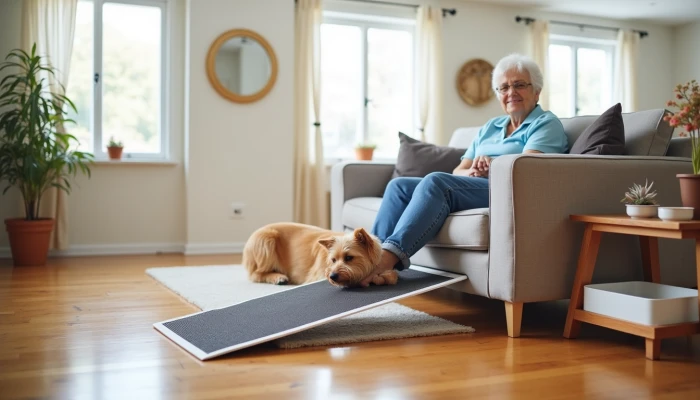
Some homes also benefit from environmental supports that help the pet move more easily, such as ramps or easier-access resting areas. These changes can reduce the chance that the older adult will lift the pet or rush to assist it.
Caregiver coordination matters here. Families should know who handles:
- Food and supply restocking
- Walking or exercise backup
- Litter box or waste cleanup if needed
- Veterinary appointments and transportation
- Temporary pet care during illness, recovery, or respite periods
Veterinary coordination can also be part of planning. If a pet's age, pain, or mobility changes are affecting household safety, it may help to discuss practical adjustments with the pet's veterinary team. Sometimes the issue is not only the older adult's mobility, but also the pet's changing needs.
The most sustainable routine is usually the one that accepts limits early. That may mean simplifying care tasks, sharing responsibilities, or adjusting the home so companionship remains realistic and safe.
Conclusion
Living at home with pets can still be a good fit as needs change, but it usually works best when families plan for the small hazards that build up over time. Clear walkways, better flooring traction, accessible pet stations, and realistic task-sharing can all support a safer daily routine.
The main idea is not to remove every risk or assume one setup works for everyone. It is to make thoughtful changes that respect both the older adult's independence and the value of pet companionship.
If the home is starting to feel harder to manage, a professional home safety assessment can help identify practical next steps. With the right adjustments, many families can make the home easier to navigate for both the person and the pet.