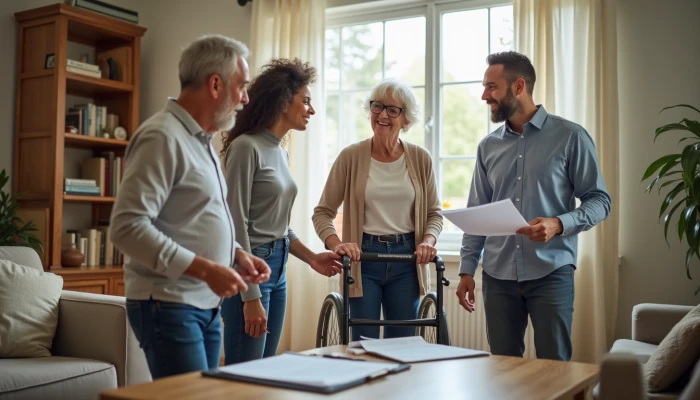
How to Find Help Paying for Home Safety Changes
Paying for home changes can feel overwhelming, especially when the need is clear but the budget is tight. Families often know an older adult would benefit from safer entryways, better lighting, bathroom updates, or support features like grab bars for seniors, but they are not sure where to start looking for financial help.
The good news is that support may come from more than one place. Depending on where you live and your situation, help may include grants for home safety, nonprofit contributions, local aging services, disability-related programs, or tax credits. The challenge is that these programs often have different rules, paperwork, and limits.
This guide walks through a practical process for finding and applying for assistance. It stays focused on realistic next steps for aging at home, including how to organize your needs, where to ask for help first, and how to compare options without assuming every program will apply to every household.
Understanding Financial Assistance Options for Home Modifications
Financial help for home modifications usually falls into a few main categories: grants, tax credits, nonprofit assistance, and local or regional support programs. Each works differently.
Grants are typically the most appealing because they do not usually need to be repaid, but they may be limited, competitive, or restricted to specific needs. Some programs focus on safety-related changes such as railings, ramps, accessible bathroom updates, or entry improvements. Others may require proof that the change supports mobility or daily function.
Tax credits work differently. Instead of reducing the upfront bill, they may help offset part of the cost when you file taxes, if the program applies in your area. These can be useful, but they are not the same as immediate cash assistance, and eligibility depends on local rules.
Nonprofit programs may offer direct labor, volunteer repairs, donated materials, or help coordinating the work. In some cases, this can make small but important changes more affordable, such as bathroom safety for seniors, improved lighting, or basic accessibility fixes.
Eligibility varies widely. Common factors include:
- Age
- Income
- Disability or functional limitation
- Homeownership or landlord approval
- Whether the modification is tied to safety or accessibility
- Location, since many programs are local
Before you apply anywhere, it helps to sort your needs into priorities.
| Priority level | Examples | Why it matters for funding |
|---|---|---|
| Urgent safety need | Loose steps, no handrails, unsafe tub access | Programs may prioritize immediate safety risks |
| Daily function need | Difficulty entering the home, moving between rooms, bathing safely | Some programs look for clear impact on independence |
| Preventive improvement | Better lighting, lever handles, minor layout changes | Useful, but sometimes lower priority for limited funds |
It also helps to separate needs from preferences. A program may be more likely to support a medically or functionally necessary change than a general home upgrade.
If you are helping an aging parent, create a short written list of the top three modifications needed now. That list can guide calls, applications, and estimates, and it makes it easier to explain the situation clearly.
Exploring Local and National Nonprofit Programs
Nonprofit organizations can be an important starting point, especially when a household needs modest but meaningful safety changes and cannot easily pay out of pocket. Some nonprofits support aging in place through volunteer labor, repair programs, accessibility work, or partnerships with local service agencies.
Examples often mentioned in this space include Habitat for Humanity programs in some communities and organizations such as Rebuilding Together. Availability depends on the local chapter, so it is important to check what services are actually offered in your area rather than assuming a national name means the same program everywhere.
Nonprofit contributions may take several forms:
- Free or reduced-cost labor
- Minor repair programs tied to safety
- Accessibility-focused home updates
- Referrals to partner agencies or vetted local programs
- Home assessments that help define what changes are most urgent
These programs often prioritize people with limited income, mobility challenges, disability-related needs, or unsafe housing conditions. Some also focus on owner-occupied homes rather than rentals.
When you contact a nonprofit, ask practical questions first.
- Do you offer home modifications, repairs, or both?
- Are services limited to certain ZIP codes or counties?
- Do you serve renters if the landlord agrees?
- Is there an income limit?
- Do you require a home safety assessment?
- Is there a waitlist?
- Do you help with bathroom safety for seniors, such as safer bathing access or support fixtures?
Many applications require documents. Gather these early:
- Proof of age or identity
- Proof of income
- Proof of homeownership or written landlord approval
- Photos of the problem area
- Notes from a clinician or therapist if functional need is relevant
- Contractor estimates, if requested
A common mistake is applying with a vague request like "make the home safer." A stronger request is specific and easier to review, such as improving tub access, adding se handholds, or addressing a hazardous entry step. If the need involves bathing, mention the actual barrier, not just the room. For example, a household may need safer shower access, space for shower chairs for seniors, or support around toilet and bathing areas.
Nonprofits may not cover every project, but they can sometimes reduce the total cost enough to make the remaining work manageable through another program or family budget.
Working with Area Agencies on Aging (AAA)
If you do not know where to begin, an Area Agency on Aging is often one of the most useful first calls. These agencies commonly help older adults and caregivers understand local services, including home modification programs, caregiver support, transportation, nutrition services, and referral networks.
For this topic, the biggest value of an AAA is coordination. Instead of searching program by program on your own, you may be able to speak with someone who knows which local resources are active, what the usual eligibility rules look like, and whether there are waiting lists.
An AAA may be able to help with:
- Referrals to grants for home safety or accessibility programs
- Information about local nonprofit repair programs
- Screening for age- or income-based services
- Home safety assessment referrals
- Guidance on what paperwork to prepare before applying
Some agencies or partner organizations may offer home safety assessments directly. These assessments can help identify which changes matter most for safe aging at home, especially in high-risk areas like bathrooms, stairs, and entrances. They can also help families avoid spending limited funds on lower-priority projects first.
When you call, be ready with a short summary.
- The older adult's age and living situation
- The main safety or accessibility concerns
- Whether the person owns or rents the home
- Any income-related concerns
- Whether there is a recent change in mobility or daily function
Ask the agency to help you narrow the list to the most relevant programs. A focused list is usually better than a long list of possibilities that do not match your situation.
If you are a long-distance caregiver, ask whether the agency can mail forms, speak with an authorized family contact, or connect you with a local case manager or community partner. Even if the AAA does not fund the modification directly, it may save time by pointing you to the right local path first.
Because services differ by location, treat the AAA as a starting point for local verification, not a guarantee that every service mentioned will be available in your area.
Applying for Grants and Tax Credits
Once you identify possible programs, the next step is building a clean application package. This matters because funding programs often have limited staff and limited budgets. Clear, complete applications are easier to review.
Use this simple application sequence.
- List the exact modifications needed
- Gather proof of income, age, and housing status
- Collect any supporting medical or functional documentation if requested
- Request written estimates from qualified professionals when required
- Confirm deadlines and submission rules
- Keep copies of everything you send
Your written request should explain the problem in practical terms. Focus on safety, access, and daily function. For example, describe difficulty stepping into the tub, navigating entry stairs, or using a bathroom safely without support. If the project includes grab bars for seniors or other bathroom changes, explain the functional reason they are needed.
Some programs may require estimates from licensed contractors or other qualified professionals. That does not mean you need to hire someone before approval, but you may need a documented scope of work and expected cost. Avoid doing structural, electrical, or other regulated work without proper professional involvement where required.
Tax credits can also be part of the plan. In some regions, a seniors home safety tax credit or similar accessibility-related credit may help offset eligible expenses. These programs are jurisdiction-specific, so review the official rules carefully. Pay attention to:
- Who qualifies
- Which home modifications count
- Whether the credit is refundable or nonrefundable
- What receipts and records must be kept
- Whether the work must be completed within a certain period
Combining resources may be the most realistic approach. For example, one household might use nonprofit labor for minor repairs, a local grant for accessibility work, and a tax credit for part of the remaining eligible cost.
Here is a simple comparison tool to help decide what to pursue first.
| Option | Best for | Watch for |
|---|---|---|
| Grant program | Larger safety or accessibility needs | Limited funding, strict eligibility, waitlists |
| Nonprofit assistance | Smaller projects or labor support | Service area limits, narrower project scope |
| Tax credit | Households able to pay upfront and claim later | Not immediate cash help, local rules vary |
| AAA referral pathway | Households unsure where to start | Referral only, not always direct funding |
A few application habits can improve the process.
- Apply early if the need is growing but not yet urgent
- Keep a folder with estimates, photos, and forms
- Follow up politely if you do not hear back
- Ask whether denied applicants can be referred elsewhere
Not every application will be approved, and not every program will fit. But a structured approach makes it easier to move from general concern to concrete next steps.
Conclusion
Finding financial help for home modifications can take time, but there are real places to look beyond paying the full cost alone. Grants for home safety, nonprofit contributions, and local aging services may each cover part of the picture, especially when you start with a clear list of the most important changes.
For many families, the most practical path is to begin with local coordination through an Area Agency on Aging, then check nonprofit programs and any region-specific grant or tax credit options. The goal is not to find one perfect program. It is to build a workable plan that supports safer, more sustainable aging at home.
If you start early, stay organized, and focus on the highest-priority modifications first, you will be in a better position to compare options and act when support becomes available.