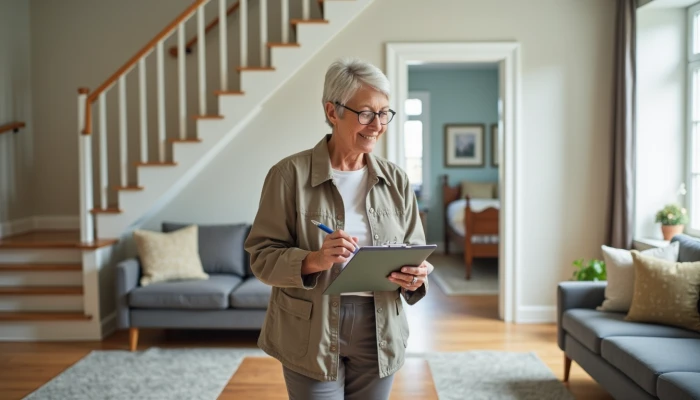
How to Walk Through a Parent’s Home and Spot Safety Risks Early
A senior home safety assessment does not need to start with a contractor or a major renovation. For many families, the first useful step is a careful walkthrough that looks at how an older adult actually moves through the home each day.
This matters because small hazards often add up. A dim hallway, a loose rug, hard-to-reach storage shelf, or missing handrail may not seem urgent on its own. Together, they can make daily routines harder and less safe.
A practical assessment helps you slow down, observe, and prioritize. The goal is not to create a perfect home. It is to identify common risks, make realistic non-invasive changes, and notice when a qualified professional should be involved.
Use this guide as a simple process you can repeat over time as needs change.
Understanding the Home Safety Assessment Process
A good assessment is structured, not rushed. Instead of looking for one big problem, move room by room and focus on how the person uses the space during normal routines such as getting out of bed, bathing, cooking, and answering the door.
Start with a walkthrough during daylight, then repeat key areas in the evening. Lighting problems often show up more clearly at night, especially on the path from the bedroom to the bathroom.
As you assess each area, look for three broad types of issues:
- Trip and slip hazards, such as clutter, cords, loose rugs, and uneven flooring
- Access barriers, such as narrow pathways, hard-to-reach storage, or missing supports
- Visibility and emergency concerns, such as poor lighting, unclear exits, or hard-to-find contact information
It helps to prioritize higher-risk areas first. Bathrooms, kitchens, stairs, and entryways usually deserve the closest attention because they combine movement, moisture, carrying items, or changes in level.
Use this simple step-by-step process:
- Walk through the home once without changing anything.
- Write down visible hazards room by room.
- Watch or discuss daily routines to see where strain, reaching, or balance problems happen.
- Mark each issue as fix now, fix soon, or monitor.
- Make the easiest non-invasive changes first.
- Recheck the home after changes are made.
A simple scoring method can help if you feel overwhelmed.
| Priority level | What it means | Example |
|---|---|---|
| Fix now | Could cause a near-term fall, slip, or access problem | Loose rug at the bathroom entrance |
| Fix soon | Not urgent today, but likely to create difficulty | Frequently used items stored too high |
| Monitor | Worth revisiting as needs change | Furniture layout that is manageable now but tight for a walker |
Checklists are useful because they keep you from relying on memory. They also make it easier to repeat the same review every few months.
Bathroom Safety: Key Considerations
Bathrooms are one of the most important places to review because water, hard surfaces, and tight spaces can raise fall risk. This is also where many daily routines involve stepping, turning, reaching, and standing up from a low position.
Begin by checking whether support points are present and stable. Grab bars for seniors are commonly used near the toilet and inside or just outside the shower or tub area, but the key issue in an assessment is not just whether a bar exists. It is whether it is placed where support is actually needed and whether it feels se.
Then review the basics of bathroom safety for seniors:
- Is the path from the bedroom to the bathroom clear and well lit?
- Are there loose rugs or bath mats that slide?
- Can toiletries be reached without bending low or stretching high?
- Is the tub or shower entry awkward or slippery?
- Is there enough light near the sink, toilet, and bathing area?
A practical bathroom checklist can help:
- Check grab bars for stability near the toilet, tub, and shower
- Remove or se loose rugs and mats
- Improve lighting in the bathroom and along the nighttime path
- Store daily-use items between waist and shoulder height
- Keep the floor clear of baskets, scales, and extra items
- Look for signs that stepping into the tub or shower is difficult
If you are unsure where the real problem is, observe the routine. For example, notice whether the person steadies themselves on a towel bar, wall, vanity, or door frame. That can signal a need for safer support.
Also look for comfort and organization issues that affect safety. When items are scattered on the floor or tucked into deep cabinets, people may rush, twist, or overreach. Simple shelf or bin storage can reduce that strain without changing the room’s structure.
Kitchen and Living Area Safety
Kitchens and living spaces often look safe at first glance, but they contain many everyday hazards. These are the rooms where people carry items, navigate around furniture, and reach into cabinets or onto shelves.
In the kitchen, focus on access and routine. Ask whether common items can be reached safely without a step stool or awkward bending. Check whether appliances are working properly and whether controls are easy to see and use.
Look for these common issues:
- Clutter on floors, walkways, or table edges
- Loose rugs or uneven flooring
- Frequently used cookware or dishes stored too high or too low
- Poor task lighting near counters, stove, or sink
- Appliance controls that are hard to read
Some guidance on aging in place also suggests using contrast to improve visibility. For example, contrasting colors between counters and cabinets can make edges easier to distinguish.
In living areas, the main goal is clear movement. Furniture should allow easy walking without tight turns or side-stepping. Cords should not cross pathways, and low tables or decorative items should not force someone to weave around them.
Use this room check:
- Clear walking paths between seating, doors, and hallways
- Remove loose rugs or se them properly
- Check that lamps and switches are easy to reach
- Make sure favorite seating is stable and easy to get in and out of
- Move commonly used items closer to where they are used
If cooking safety is a concern, note it as an assessment issue rather than trying to solve it with a single product. Some families consider automatic shut-off tools for stoves, but the larger question is whether the kitchen setup matches the person’s current habits and abilities.
Stair and Step Safety Evaluations
Stairs and steps deserve their own review because even a small change in height can become risky when lighting is poor or support is missing. Check both indoor and outdoor steps.
Start at the top and bottom of each staircase. Is the area bright enough to see the edge of each step clearly? Are there objects stored on the stairs? Do shoes, bags, or laundry collect near the landing?
Then inspect the stairs themselves:
- Are handrails present where needed?
- Do the handrails feel se?
- Are the steps even and in good condition?
- Is the stair surface slippery or visually hard to distinguish?
- Are there transitions at doorways or thresholds that create a trip point?
High-contrast stair treads or edge markings can help make step boundaries easier to see. Good lighting matters just as much. A safe-looking staircase during the day may feel very different at night.
Pay attention to behavior as well as structure. If the older adult avoids certain stairs, grips the wall instead of a rail, or carries items while climbing, those are useful warning signs.
For entry steps, check whether weather, leaves, or moisture create extra slipping risk. A sturdy rail, better lighting, and a clearer landing can be meaningful non-invasive improvements.
If stairs are already difficult to use, avoid unsafe DIY structural changes. An assessment can identify the problem, but larger modifications should be planned with qualified help when needed.
Non-Invasive Modifications for Improved Safety
Many helpful changes do not require major construction. In fact, the most useful fixes are often simple adjustments that reduce reaching, improve visibility, and keep floors clear.
These changes can support safer movement without changing the home’s structure:
- Use shelves or bins to keep toiletries, cleaning items, or kitchen supplies organized and off the floor
- Rearrange storage so daily-use items are easier to reach
- Add brighter bulbs where lighting is dim, if fixtures allow it
- Remove loose rugs or se them more effectively
- Add contrast on step edges or important surfaces where visibility is poor
- Consider safety tools such as automatic shut-off features where cooking risks are a concern
Some accessibility changes are more complex. For example, doorway width and thresholds matter if a walker or wheelchair is involved. Temporary threshold adjustments may help in some homes, but widening doorways or making structural access changes usually requires professional evaluation.
A useful rule is to separate changes into two groups:
| Type of change | Usually manageable as a simple home adjustment | Usually needs professional input |
|---|---|---|
| Organization | Moving items to easier-to-reach shelves | Built-in storage changes |
| Floor safety | Removing clutter and loose rugs | Repairing uneven flooring |
| Lighting | Improving bulb brightness or lamp placement | New wiring or fixture installation |
| Access | Clearing pathways and reviewing thresholds | Structural doorway changes |
This approach keeps the focus on realistic progress. Small changes may not solve every problem, but they can reduce friction in daily routines and make larger concerns easier to spot.
Creating a Customized Safety Checklist
A general checklist is a good starting point, but the most useful version is tailored to the person living in the home. A home that works for one older adult may not work for another, especially if mobility, vision, hearing, or memory needs differ.
Build your checklist around daily routines and known trouble spots. Include what happens in the morning, overnight, during meals, and when entering or leaving the home.
Your customized checklist might include:
- Clear pathways from bed to bathroom
- Good lighting in hallways, stairs, and entry points
- Stable seating with easy access
- Safe storage for medications and daily-use items
- Emergency contacts posted in an easy-to-find place
- Bathroom supports and non-slip surfaces
- Kitchen items stored within easy reach
- Floor surfaces free of clutter, cords, and loose rugs
- Entry and exit routes that are easy to use
You can also add personal observations such as:
- Needs extra support when standing from the toilet
- Reaches overhead for dishes every day
- Leaves shoes near the stairs
- Has trouble seeing dark step edges
A senior fall prevention checklist works best when it is updated. Revisit it after a health change, a near-fall, a new mobility aid, or a change in who is providing care.
If the home has more serious access issues, or if you are unsure how to prioritize changes, a qualified occupational therapist or home safety professional may be able to provide a more detailed assessment. That does not replace your checklist. It strengthens it.
Conclusion
A home safety assessment is most useful when it is practical, repeatable, and based on real daily routines. Caregivers do not need to solve everything at once. A steady room-by-room review can uncover common hazards, highlight where non-invasive modifications may help, and show when outside expertise is appropriate.
The biggest value is often in the pattern you notice over time. When you reassess regularly, you can respond to changing needs before small problems become bigger ones. That kind of steady attention can support safer, more comfortable aging at home without overcomplicating the process.