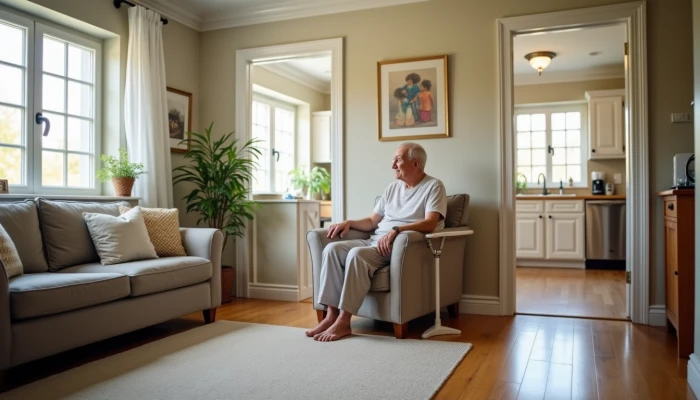
Safer at Home on a Budget: Low-Cost Changes That Can Make Daily Life Easier
Making a home safer for an older adult can feel expensive before you even begin. Families often picture major bathroom renovations, widened doorways, or large equipment purchases. In reality, many useful changes start much smaller.
For households focused on aging at home, the first goal is usually not perfection. It is reducing obvious risks, improving day-to-day comfort, and making movement through the home easier. Small upgrades can support home safety for seniors, especially when they are chosen around the person's actual routines and mobility needs.
This guide focuses on practical, lower-cost steps that may help, along with assistance programs that some households use to cover part of the cost. These ideas are not a substitute for medical advice or a professional home safety assessment when one is needed, but they can help families make a realistic start.
Essential Low-Cost Home Safety Upgrades
Some of the most useful changes are also among the simplest. The best place to begin is usually where slips, poor lighting, and unstable movement happen most often: bathrooms, hallways, and entry points.
Bathrooms deserve early attention because wet surfaces and awkward transfers can increase risk. Guidance on bathroom safety for seniors commonly emphasizes stable support near the toilet and in the shower or tub area. Properly installed grab bars for seniors can offer a more dependable handhold than towel bars or sink edges, which are not designed to support body weight.
Other affordable bathroom additions can also help.
- Non-slip mats or strips can improve traction on wet floors.
- Shower chairs for seniors can make bathing easier for people who tire quickly or feel unsteady standing.
- Handheld shower attachments may reduce reaching and twisting during bathing.
- Raised toilet seats may help some people sit and stand with less strain.
Lighting is another low-cost improvement with a practical payoff. Motion-sensor lights in hallways, bathrooms, and near the bed can reduce the need to search for switches in the dark. Night-lights along the route from bedroom to bathroom can also make overnight trips easier.
If you are not sure where to start, use this simple priority checklist.
- Check whether the bathroom has a stable grab point for getting in and out of the shower and on and off the toilet.
- Check whether floors become slippery when wet.
- Check whether nighttime walking paths are well lit.
- Check whether frequently used items are stored within easy reach.
- Check whether door thresholds, loose rugs, or cords interrupt walking paths.
A useful way to budget is to tackle upgrades in order of daily use. If the older adult uses one bathroom several times a day, that room may deserve attention before less-used spaces. If nighttime walking is a concern, lighting may come before cosmetic updates.
Low-cost does not mean no planning. For anything that must support body weight, such as permanent grab bars, proper installation matters. If walls, tile, or mounting surfaces are unclear, it may be worth paying for a qualified installer rather than guessing.
Assistance Programs and Financial Aid Options
When even modest upgrades feel hard to afford, it may help to look beyond retail purchases. Some families qualify for public or nonprofit support, although availability and rules vary by location and program.
Common places to check include Medicaid-related home and community support programs, Veterans Affairs benefits for eligible veterans, and state or local home modification grants. These programs often have income, disability, age, service history, or housing eligibility requirements, so it is important not to assume coverage.
Nonprofit organizations may also help with repairs or accessibility-related improvements. National groups often mentioned in home modification guidance include Rebuilding Together and Habitat for Humanity programs focused on aging in place. Depending on the local chapter, support may include labor, minor repairs, safety upgrades, or referrals.
Another option sometimes cited for very-low-income homeowners is the USDA Section 504 Home Repair program, which may offer loans for repairs and improvements and, in some cases, grants for older homeowners to address health and safety hazards. Program terms and eligibility can change, so families should confirm details directly with the administering agency.
This comparison can help narrow the search.
| Option | What it may help with | Common limits to expect |
|---|---|---|
| Medicaid-related programs | Some home and community-based supports or modifications | State-specific rules, functional eligibility, limited scope |
| VA-related benefits | Certain accessibility or home modification support for eligible veterans | Service-related or benefit eligibility requirements |
| Nonprofit repair programs | Minor repairs, volunteer labor, safety-focused updates | Waitlists, local chapter availability, income limits |
| Section 504 Home Repair | Repairs, modernization, hazard removal for very-low-income homeowners | Homeownership, income limits, location and program rules |
| Local grants or county programs | Small home safety projects or referrals | Funding caps, geography limits, application windows |
If you are helping an aging parent, a practical search sequence is often easier than trying to compare everything at once.
- List the specific safety problems in the home.
- Separate urgent fixes from helpful but less urgent upgrades.
- Contact local aging services, housing agencies, or 211 to ask about repair and modification programs.
- Ask each program what it covers, who qualifies, and whether renters are eligible.
- Get written estimates for any work that requires installation.
This step-by-step approach can save time and help avoid applying for programs that do not match the actual need. It also makes it easier to combine small out-of-pocket fixes with outside assistance where available.
Practical Fall Prevention Strategies Without Major Renovations
Not every safety improvement requires construction. In many homes, the first gains come from changing layout, lighting, and daily habits rather than remodeling walls or replacing fixtures.
Start by looking at how the person moves through the home during ordinary tasks. A clear walking path from bed to bathroom, from favorite chair to kitchen, and from entry door to main living area can matter more than a long list of scattered upgrades. Rearranging furniture to widen paths, removing low tables from tight corners, and securing or removing loose rugs can reduce common tripping points.
Threshold ramps can also help smooth small level changes between rooms or at entry points. They may be useful when a cane, walker, or shuffling gait catches on raised edges. The right fit depends on the height of the threshold and the mobility device being used.
Some households also consider no-drill or adhesive-backed support products for temporary situations, rentals, or trial setups. These may seem convenient, but they should be approached carefully. Temporary supports are not interchangeable with properly mounted grab bars, especially where full body-weight support may be needed. If there is any doubt about whether a person may pull hard on a support during a transfer, a more se option is usually the safer path.
Here is a simple room-by-room fall prevention checklist that does not require major renovation.
- Remove clutter from floors, stairs, and doorways.
- Keep cords, pet items, and small furniture out of walking routes.
- Place frequently used items between waist and shoulder height.
- Add brighter bulbs or motion-activated lighting where visibility is poor.
- Use non-slip backing under rugs, or remove rugs that curl or slide.
- Check chairs and beds for stable height and easy transfers.
- Mark or improve visibility at thresholds and step-down areas.
It also helps to know when a low-cost fix may not be enough. Consider asking for a professional home safety assessment if the older adult has repeated near-falls, difficulty transferring, new confusion, or trouble using stairs safely. A therapist, aging-in-place specialist, or other qualified professional may identify risks that are easy to miss in a familiar home.
The goal is not to promise that a few changes will . It is to make everyday movement simpler, steadier, and less demanding. For many families, that starts with a better layout, better lighting, and safer support in the places used most often.
Conclusion
A safer home does not always begin with an expensive remodel. Often, it begins with a few well-chosen changes: better lighting, safer bathroom support, clearer walking paths, and small adjustments that match how the older adult actually lives.
Assistance programs can sometimes help cover part of the cost, but they are not universal and usually come with eligibility rules. That is why a practical plan matters. Start with the highest-risk daily activities, make incremental improvements, and seek qualified help for installations or assessments when needed.
For families trying to support independent living for seniors on a budget, steady progress is often more realistic than a full renovation. Small, thoughtful upgrades can still make the home easier to navigate, more comfortable to use, and better suited for aging in place.