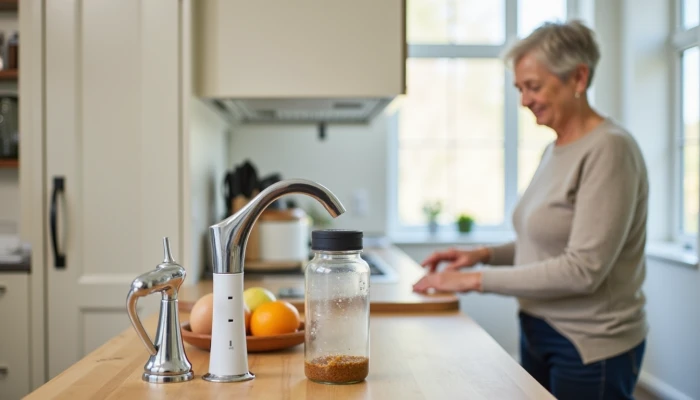
Simple Home Changes That Help When Hand Strength Gets Weaker
Limited hand strength can turn ordinary tasks into frustrating ones. Opening a round doorknob, twisting a key, gripping a jar, or steadying yourself in the bathroom may take more effort than it used to. For older adults, that extra effort can also increase fatigue and make rushed movements more likely.
The goal is not to overhaul the whole home at once. Small, practical changes often help the most. Many senior mobility aids and home modifications are designed to reduce the need for tight gripping, pinching, or twisting.
This guide focuses on three areas where weak grip and reduced dexterity often show up first: getting in and out of the home, handling kitchen tasks, and staying safer in the bathroom. The emphasis is on simple tools, realistic tradeoffs, and when it makes sense to ask an occupational therapist or qualified installer for help.
Ergonomic Door Handles and Key Turners for Easier Access
Doors are easy to overlook until they become difficult to use several times a day. Traditional round knobs usually require grasping, twisting, and enough wrist strength to turn them smoothly. That combination can be hard for people with arthritis, hand weakness, or reduced coordination.
Lever door handles are often easier because they work with a push-down motion instead of a tight grip. In many cases, a person can press a lever with the hand, forearm, or elbow if their fingers are stiff or sore. Practical aging-in-place guidance commonly recommends lever-style hardware for this reason, and clinical commentary has also noted that replacing knobs with handles can reduce strain on sensitive hands and wrists.
Key turners for arthritis can help in a similar way. These devices enlarge the part of the key you hold, giving you more leverage and reducing the need for fine motor control. They can be useful for exterior doors, storage locks, and other places where a small metal key is hard to grip.
When deciding where to start, focus on the doors used most often.
- Main entry door
- Bathroom door
- Bedroom door
- Door to the garage or porch
- Any interior door used during nighttime trips
A simple way to prioritize is to look for doors that cause hesitation, pain, or awkward body movements. If someone braces against a wall while turning a knob, uses both hands for a key, or avoids a certain door altogether, that door is a good candidate for change.
A few setup details matter.
- Choose handles that are easy to see and easy to distinguish from the door surface.
- Make sure the handle is within comfortable reach and not blocked by furniture.
- If the door is heavy or sticks in the frame, changing the handle alone may not solve the problem.
- For entry doors, consider whether the lock is also hard to operate and whether a locksmith should assess the full setup.
If you are comparing options, this quick framework can help.
| Task | Round knob | Lever handle | Key turner |
|---|---|---|---|
| Open interior door | Requires grip and twist | Push-down motion, less gripping | Not applicable |
| Open door with sore fingers | Often difficult | Usually easier | Not applicable |
| Lock or unlock with a key | No help | No help by itself | Adds leverage for turning |
| Use with limited dexterity | Often frustrating | More forgiving | Can reduce fine motor demands |
One important limit: easier hardware can improve access, but it does not fix every safety issue. If the person also has balance problems, poor lighting, or a threshold that catches a walker, those issues still need attention.
Adaptive Kitchen Tools to Simplify Daily Tasks
The kitchen often demands repeated gripping, lifting, twisting, and pinching. That can make meal preparation tiring even when the tasks seem small. Lids, utensils, cookware, peelers, and food packaging can all become barriers when hand strength drops.
Adaptive kitchen tools work best when they reduce force, not just add gadgets. For many households, the most helpful changes are simple: lighter pans, easier-open containers, and utensils with larger handles that are easier to hold sely.
Examples that may reduce strain include:
- Electric jar or can openers for tight lids
- Lightweight cookware that is easier to lift with one hand or two hands
- Adaptive utensils with built-up or non-slip handles
- One-handed cutting boards or food prep tools that stabilize food
- Pump-style soap or dish dispensers instead of twist caps
These tools can support independence, but it helps to match the tool to the exact task that is causing trouble. If opening containers is the main issue, start there. If lifting a full pot feels risky, lighter cookware may matter more than new utensils.
A practical kitchen walkthrough can help you spot where grip demands are highest.
- Open the refrigerator, pantry, and most-used drawers.
- Pick up the pans, dishes, and utensils used every day.
- Test one meal from start to finish, including opening packages and cleaning up.
- Note where twisting, pinching, or carrying feels difficult.
- Change the hardest steps first.
It also helps to reorganize the kitchen so frequently used items are easier to reach and hold.
- Store daily dishes between waist and shoulder height.
- Move heavy appliances off high shelves.
- Keep jar openers and gripping aids near the prep area.
- Use containers with easier lids when possible.
- Avoid overfilling kettles, pitchers, or pots.
Some tradeoffs are worth mentioning. Electric tools can reduce effort, but they may add counter clutter or require charging or batteries. Built-up handles can improve grip, but they may not fit neatly in every drawer. One-handed tools can be useful, but they should feel stable and intuitive before becoming part of a daily routine.
If hand weakness is affecting eating as well as cooking, an occupational therapist may be able to suggest utensils or daily living aids for seniors that fit the person’s grip pattern and range of motion. That kind of individualized advice is often more useful than buying several tools at once and hoping one works.
bathroom safety modifications for se mobility
The bathroom combines wet surfaces, hard flooring, and frequent hand use. For someone with limited grip strength, tasks like lowering onto the toilet, stepping into the shower, or standing up after bathing can be harder and less steady. That is why bathroom safety for seniors often depends on both support and ease of use.
Grab bars for seniors are one of the most practical changes because they provide a stable handhold during transfers and position changes. Common safety guidance places many horizontal grab bars around 33 to 36 inches from the floor, but exact placement should still match the person’s height, reach, and movement pattern. A bar that is technically installed but awkward to reach may not help much.
Shower chairs for seniors can also reduce fatigue and lower the need to stand on wet surfaces for long periods. For someone whose hands tire easily, sitting during bathing may make it easier to wash, rinse, and manage toiletries without rushing.
Non-slip flooring or slip-resistant surfaces add another layer of support. They do not replace grab bars or supervision when needed, but they can improve traction in a room where even a small loss of balance matters.
When reviewing bathroom safety modifications, check these points.
- Is there a se grab bar near the toilet?
- Is there a se grab bar at the shower or tub entry?
- Can the person reach the bar before and after the transfer?
- Is the grab surface comfortable to hold, including with wet hands?
- Is there a stable place to sit while bathing if standing is tiring?
- Are soap, shampoo, and towels easy to reach without twisting or overreaching?
Installation quality matters as much as product choice. Process guidance commonly emphasizes anchoring grab bars sely, thinking through the full path of movement, and testing reach before drilling. Suction-style bars may be used for light balance support in some cases, but they should not be treated as a substitute for properly mounted bars when weight-bearing support is needed.
This simple bathroom planning table can help families think through the setup.
| Bathroom task | Hand-strength challenge | Practical modification |
|---|---|---|
| Sitting down or standing up from toilet | Hard to push off or steady the body | Properly installed grab bar near toilet |
| Stepping into shower | Limited grip during transition | Grab bar at entry and non-slip surface |
| Washing while standing | Hand fatigue and balance strain | Shower chair |
| Reaching soap or shampoo | Slippery grip and overreaching | Easy-reach storage and pump dispensers |
If a bathroom layout is tight, oddly shaped, or already difficult to navigate with a walker, it may be worth getting a home safety assessment for seniors. An occupational therapist, certified aging-in-place specialist, or other qualified professional can help place supports where they match real movement patterns instead of generic measurements alone.
Conclusion
When hand strength gets weaker, the most useful changes are often the simplest ones. Lever door handles, key turners for arthritis, adaptive kitchen tools, grab bars, and shower seating can reduce strain in places where daily tasks happen over and over again.
The key is to match the solution to the task. Start with the doorway, kitchen step, or bathroom movement that causes the most difficulty. Then make one or two focused changes and see whether they improve comfort and ease of use.
These tools and modifications can support independence, but they are not one-size-fits-all and they do not remove every fall risk. If you are unsure what will help most, a home safety professional or occupational therapist can assess the space and recommend options that fit the person’s strength, reach, and routines.