The Overlooked Home Hazards That Often Show Up in Senior Safety Assessments
A home can feel familiar and still contain hidden risks. That is especially true in places people use every day without much thought, such as a dim hallway, a crowded path to the bathroom, or a slightly uneven entry threshold.
For families focused on aging at home, these details matter because many falls and near-misses happen during ordinary routines, not dramatic emergencies. A senior home safety review often turns up issues that seem minor on their own but become more important when vision, balance, strength, or reaction time change.
The good news is that many of these hazards can be addressed with practical steps. Some are simple housekeeping changes. Others may call for better lighting, added support, or a professional assessment to spot risks that are easy to overlook.
Use this guide as a room-to-room troubleshooting starting point, especially if you are helping an older parent or relative stay safe and independent at home.
Poor Lighting in Hallways and Entryways
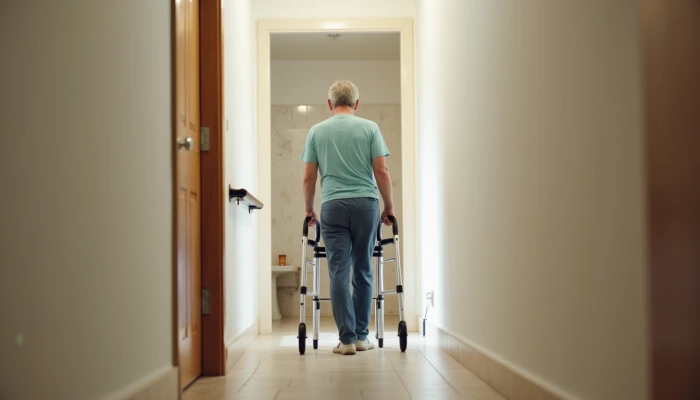
Poor lighting in hallways and entryways is one of the most common problems professionals notice during home assessments. These are transition spaces, and transitions are where people are more likely to misjudge a step, miss an object on the floor, or hesitate when moving at night.
Dim pathways can be especially difficult for older adults with reduced night vision, glare sensitivity, or slower adjustment between bright and dark areas. A hallway that seems acceptable during the day may be much harder to navigate after sunset.
Practical improvements often focus on making light more consistent and easier to access. Guidance for aging in place commonly points to hands-free options such as motion-sensor lights or night lights in hallways and near entry doors. These can help reduce the need to search for a switch in the dark.
Maintenance matters too. Burned-out bulbs, dusty fixtures, and shadows from poorly placed lamps can reduce visibility even when lighting is technically present.
A simple lighting check can help you spot issues quickly.
- Walk the route from bedroom to bathroom after dark.
- Check whether switches are easy to reach from the doorway.
- Look for shadows near corners, rugs, and thresholds.
- Replace bulbs promptly and make sure fixtures are working consistently.
- Consider cord-free lighting where possible so added lights do not create a new tripping hazard.
If an older adult pauses, shuffles, or reaches for walls in these areas, that can be a sign the lighting setup needs attention.
Cluttered Walkways and High-Traffic Areas
Cluttered walkways are easy to normalize because they often come from daily life. Shoes by the door, a stack of mail on the floor, pet toys, charging cords, small tables, or baskets placed just a little too far into the path can all create problems.
Experts commonly flag these items because they narrow walking space and increase the chance of catching a foot, walker, or cane. High-traffic areas deserve special attention because they are used repeatedly throughout the day, often when someone is tired, distracted, or carrying something.
The goal is not to make the home feel empty. It is to keep walking routes predictable and clear.
Try this quick walkway checklist.
- Remove loose items from paths between the bed, bathroom, kitchen, and main exit.
- Keep shoes, bags, and packages off the floor near entryways.
- Se or reroute cords so they do not cross walking areas.
- Avoid using small accent furniture in narrow passages.
- Give frequently used items a designated storage spot that does not require bending or reaching far.
Professional home safety assessments can be useful here because another set of eyes often notices hazards that household members have stopped seeing. What feels normal after years in the same home may still be a meaningful fall risk.
If mobility aids are already in use, check whether the person can turn, pass through, and stop safely in each high-traffic area without bumping into furniture or stored items.
Bathroom Safety: Beyond Grab Bars
Bathrooms get a lot of attention in senior home safety, but the hidden hazards are not limited to whether grab bars for seniors are present. Lighting, traction, and layout also matter.
Poor visibility near sinks, tubs, and showers can make it harder to judge wet spots, edges, and changes in floor level. That is one reason bathroom safety for seniors usually involves more than one adjustment. Better lighting near the mirror, shower entry, and toilet area can make routine tasks easier and safer.
Non-slip mats can improve traction in wet areas, but they need to lie flat and stay in place. A mat that slides or curls at the edge can become a hazard itself. Small lighting additions, such as subtle LED strip lighting near key features, may also improve visibility without making the room feel harsh.
Support features should match the person and the space. Handrails and grab bars work best when placed where support is actually needed and at a height that fits the user. A shower chair for seniors may also help in some situations, but it should fit the shower area properly and leave enough room for safe transfers.
When reviewing a bathroom, look at the full setup.
| Area to check | What to look for |
|---|---|
| Sink area | Water on the floor, poor lighting, slippery rugs |
| Tub or shower entry | High step-in, weak support, hard-to-see edges |
| Toilet area | Limited space to stand or turn, no nearby support |
| Floor surface | Slick spots, loose mats, cluttered storage |
The safest bathroom plan depends on the person’s mobility, balance, and routine. That is why broad product claims are less helpful than a careful look at how the space is actually used.
Staircase and Entryway Risks
Staircases and entryways combine several risk factors at once: changes in level, frequent use, weather exposure, and the need to carry items in or out. Even a small problem in these areas can increase the chance of a misstep.
Common issues include poor lighting, missing or hard-to-grip handrails, worn stair edges, and thresholds that are uneven or unexpectedly raised. Entryways can be especially tricky because people often rush through them while managing keys, bags, walkers, or groceries.
A practical review should include both the inside and outside approach to the home.
- Check whether every stair is clearly visible in daytime and at night.
- Make sure handrails are se and easy to grasp.
- Look for loose mats, slick surfaces, and worn stair coverings.
- Notice whether the threshold catches shoes, canes, or walker wheels.
- Review whether there is enough space to open the door while staying balanced.
For people with more significant mobility limitations, a professional may suggest larger changes such as a ramp or stair lift. Those options can be appropriate in some homes, but they should be evaluated carefully based on the person’s needs and the home’s layout. Structural and electrical work should be handled by qualified professionals where required.
If a family notices repeated hesitation at the front step or difficulty using stairs safely, that is a good reason to move beyond a basic self-check and seek an expert opinion.
The Role of Professional Home Safety Assessments
A professional home safety assessment can help when a household wants a more complete view of risk than a casual walkthrough provides. These assessments are designed to identify fall hazards, mobility barriers, and daily-living obstacles that may not stand out to family members.
Depending on the provider, the assessment may be done by a trained aging-in-place specialist, an occupational therapy professional, or someone with related home safety credentials. Their review often covers entryways, flooring, lighting, bathroom setup, stairs, furniture placement, and how the older adult moves through the home during normal routines.
Recommendations may include a mix of simple and larger changes.
- Rearranging furniture to widen walking paths
- Improving lighting placement in high-use areas
- Removing clutter and trip hazards
- Adding support features in bathrooms or on stairs
- Considering structural modifications when mobility needs are more advanced
Costs vary by provider and location, so it is best to ask what the assessment includes before scheduling. Even so, families often find value in getting tailored guidance rather than guessing which changes matter most.
A good time to consider an assessment is when there has been a recent fall, a near-fall, a new mobility aid, a hospital discharge, or growing concern about an older adult living alone. It can also be useful as a planning step before a crisis, especially for households trying to support independent living for seniors in a realistic way.
The main benefit is not a promise of perfect safety. It is a clearer picture of where the home is helping and where it may be getting in the way.
Conclusion
Hidden hazards in a senior home are often ordinary things in ordinary places: poor lighting in hallways, cluttered walkways, slippery bathroom setups, and awkward stairs or entry thresholds. Because these issues blend into daily life, families may not notice them until a close call happens.
A practical review can make a meaningful difference. Start with the routes used most often, especially between the bedroom, bathroom, kitchen, and main entrance. Then look at lighting, floor conditions, support points, and anything that interrupts a clear path.
If the situation feels more complex, a professional assessment can help identify risks and prioritize next steps. The goal is not to make unrealistic promises. It is to create a home that better supports safety, comfort, and independence over time.