The Home Changes That Matter Most for Aging in Place
Planning for aging in place can feel overwhelming because there are so many possible upgrades, from simple lighting changes to major bathroom remodels. Most families do not need to do everything at once. What helps most is identifying the changes that reduce everyday strain and lower common household risks in the areas used most often.
Research reviews on home modifications for older adults generally find that well-chosen changes can improve function and support safer daily routines, especially when they address known hazards such as slippery bathroom surfaces, poor lighting, and difficult stairs. That does not mean any single fix can or replace hands-on care. It means the right changes can make a home easier to move through and use.
This guide focuses on practical home modifications for seniors that balance safety, affordability, and ease of implementation. It starts with high-impact areas, includes non-invasive options, and highlights when it makes sense to bring in a qualified professional.
Key Modifications for High-Risk Areas
If you are not sure where to begin, start with the places where slips, trips, and awkward movements are most likely. In many homes, that means bathrooms, stairs, entry points, and dim hallways.
A useful first step is a simple walk-through. Look for places where someone has to step over a raised threshold, reach for support that is not there, or move through a poorly lit path. Those are often the most practical starting points because they affect daily movement, not just occasional tasks.
Commonly recommended high-priority changes include:
- Grab bars near toilets and inside showers or tubs
- Non-slip mats or slip-resistant surfaces in wet areas
- Brighter lighting in hallways, entrances, and stairways
- Reduced or beveled thresholds between rooms
- Clear walking paths without loose rugs or crowded furniture
Evidence reviews commonly highlight grab bars, non-slip surfaces, and stair railings as useful modifications in higher-risk areas. Lighting matters too. Better visibility can make it easier to judge steps, spot obstacles, and move around at night without rushing.
If you need a simple way to prioritize, use this quick checklist.
| Area | What to look for | Good first step |
|---|---|---|
| Bathroom | No stable hand support, slippery floor | Add grab bars and improve traction |
| Hallway | Shadows, dark corners, hard-to-find switches | Upgrade bulbs or add motion-sensor lights |
| Entryway | Raised lip, clutter, poor footing | Smooth transitions and clear the path |
| Staircase | One rail, dim steps, slick surface | Add a second rail and non-slip treads |
These changes are often more manageable than full remodels and can create immediate day-to-day benefits without changing the entire home.
Bathroom Safety Essentials
Bathrooms deserve special attention because they combine water, hard surfaces, tight spaces, and frequent transfers in and out of the tub, shower, or toilet. For many families, this is the first room to address.
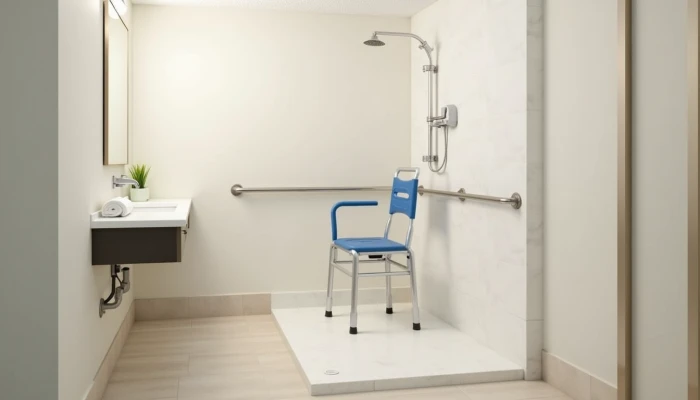
Start with support and stability. Grab bars for seniors are often one of the most practical additions because they can help with sitting, standing, and stepping in or out of the bathing area. Placement matters, and se installation is important, especially for bars expected to bear weight.
For bathing, shower chairs for seniors can reduce the need to stand on wet surfaces for long periods. A handheld showerhead can also make seated bathing easier, though any plumbing changes should be handled appropriately.
Other bathroom safety for seniors improvements may include:
- Slip-resistant flooring or non-slip coatings
- A raised toilet seat if standard height is difficult to use
- A curbless shower or low-threshold shower where feasible
- A walk-in tub in homes where that layout and budget make sense
- Better task lighting near the sink and toilet
Not every bathroom needs a full renovation. In many cases, a staged approach works well.
- Add non-slip surfaces and improve lighting.
- Install properly sed grab bars.
- Introduce a shower chair or handheld shower setup if needed.
- Consider larger changes, such as a curbless shower, only if simpler fixes are no longer enough.
Major upgrades can improve access, but they are not always the first or most cost-conscious answer. A family trying to balance safety and budget may get more immediate value from smaller changes done well than from rushing into an expensive remodel.
Kitchen Accessibility Improvements
The kitchen is not always the first room people think about, but it affects independence every day. A safer kitchen can reduce bending, reaching, carrying, and fumbling with small hardware.
Many improvements here are simple. Lever-style handles and larger drawer pulls can be easier to use than round knobs, especially for people with arthritis, weakness, or limited grip. Pull-out shelves can bring frequently used items forward so there is less reaching into deep cabinets.
You can also make the space easier to navigate by reorganizing where items are stored.
- Keep daily dishes, cups, and medications in easy-to-reach zones
- Move heavy cookware out of low cabinets if bending is difficult
- Store commonly used pantry items between waist and shoulder height
- Keep pathways wide enough for walkers or other mobility aids if needed
Lighting is another practical upgrade. Motion-sensor lighting can help with nighttime kitchen use and reduce the need to search for switches in the dark. Under-cabinet lighting may also make counters easier to see for meal prep.
Some households may consider changing counter heights or appliance placement, but those are larger projects. Before making structural changes, it helps to observe which tasks are actually difficult. If the main problem is reaching into lower cabinets, pull-out shelves may solve more than a full remodel would.
In other words, kitchen accessibility often improves most through thoughtful layout and storage changes, not just construction.
Stair and Mobility Solutions
Stairs can become one of the biggest barriers to staying comfortable at home, especially when balance, strength, or endurance changes. The goal is not to assume stairs must be eliminated. It is to make them safer to use and to recognize when more support is needed.
The most basic stair improvements are often the most important.
- Install sturdy handrails on both sides when possible
- Improve overhead lighting and make switches easy to reach
- Add non-slip treads or improve traction on each step
- Mark step edges more clearly if depth is hard to judge
- Keep stairs free of objects, cords, and loose runners
For some households, the issue is not the stairs alone but the transition to and from them. Uneven landings, clutter at the top of the stairs, or poor lighting at the bottom can increase risk. Those details are worth fixing early.
A stairlift may be worth exploring when someone can no longer manage stairs reliably even with rails and better lighting. This is not a do-it-yourself project. It usually requires professional assessment and installation, along with consideration of the staircase layout and the user's transfer ability.
If a person uses a walker or other mobility aid, think beyond the staircase itself. Ask whether the home has enough stable surfaces, enough turning space, and smooth transitions between rooms. Sometimes mobility safety improves more from better flow throughout the house than from one major device alone.
Budget-Friendly and Non-Invasive Options
Not every useful change requires demolition, custom construction, or a large budget. Many families do better with a phased plan that starts with low-cost, non-invasive solutions and saves major renovations for later, if they are still needed.
Good lower-disruption options often include:
- Motion-sensor night lights in bedrooms, bathrooms, and hallways
- Better bulbs in dim fixtures
- Furniture rearrangement to create wider walking paths
- Removal of loose rugs or use of safer rug backing
- Easy-to-reach storage for everyday items
- Temporary seating in dressing or bathing areas
- Lever-handle replacements for doors and faucets
Be cautious with temporary support products. Some short-term options may be useful for light assistance, but anything expected to support body weight should be chosen carefully and installed according to manufacturer guidance. For permanent safety needs, professionally sed solutions are usually more dependable than improvised ones.
Budget planning is easier when you group changes by urgency.
| Priority level | Typical examples | Why start here |
|---|---|---|
| High | Lighting, clutter removal, non-slip surfaces, grab bars | Addresses common daily hazards quickly |
| Pull-out shelves, lever handles, raised toilet seat, shower chair | Improves comfort and ease of use | |
| Higher-cost | Curbless shower, widened doorways, stairlift | May be worthwhile when mobility needs increase |
A practical sequence can help prevent overspending.
- Fix immediate hazards first.
- Add non-invasive supports that improve daily routines.
- Reassess after a few weeks of use.
- Consider larger renovations only if the simpler steps are not enough.
That approach keeps the process manageable and respects the fact that needs can change over time.
Conclusion
The most helpful home changes for aging in place are usually the ones that make everyday movement easier and reduce strain in the rooms used most. For many families, that means starting with bathrooms, stairs, lighting, and trip hazards rather than trying to redesign the whole house at once.
A sensible plan is to begin with high-impact, lower-cost updates such as better lighting, non-slip surfaces, and properly installed grab bars. Then watch how the space functions. If daily tasks are still difficult, you can move toward larger changes like shower conversions or stairlift installation.
The goal is not to create a perfect home overnight. It is to make thoughtful, room-specific improvements that support safety, comfort, and independence while staying realistic about budget and when qualified professional help is needed.