A Room-by-Room Home Safety Check for Older Adults
A home can support independence for years, but only if it matches a person's current needs. Small hazards that once felt manageable can become more serious over time, especially when balance, vision, strength, or reaction time change.
A home safety assessment gives families a practical way to look at the space with fresh eyes. Instead of relying on assumptions, you review each room, identify risks, and decide which changes matter most now and which can wait.
This guide explains how to approach home safety for seniors in a calm, organized way. It focuses on a room-by-room evaluation, fall risk identification, and emergency preparedness so caregivers and older adults can make realistic improvements that support safer daily living.
Understanding Home Safety Assessments
A home safety assessment is a structured review of the living space to identify hazards, accessibility barriers, and everyday setup problems that may increase the chance of falls or make routine tasks harder. Guidance on senior home assessments commonly emphasizes looking at lighting, flooring, bathroom setup, stairs, and emergency readiness rather than focusing on one single issue.
The goal is not to make a home perfect. It is to find the most important risks, prioritize practical changes, and support safer routines. That matters because many problems are easy to miss when the home is familiar to the person living there.
A useful assessment usually covers these categories.
- Fall hazards: loose rugs, cords, uneven flooring, clutter, slippery surfaces
- Access barriers: narrow pathways, high shelves, difficult door hardware, steps without support
- Visibility issues: dim lighting, glare, missing night lights, hard-to-read labels
- Bathroom and stair risks: wet floors, missing handholds, poor traction, limited turning space
- Emergency preparedness: missing contact lists, hard-to-reach phones, unclear exit routes
Many professionals conduct evaluations room by room because that approach is easier to follow and less likely to overlook details. It also helps families separate urgent fixes from longer-term projects.
If you want a simple way to start, use a three-level priority system.
| Priority | What it means | Examples |
|---|---|---|
| High | Risk could cause immediate harm or block essential movement | Loose rug at entry, no stair handrail, slippery shower floor |
| Problem adds strain or raises risk over time | Poor kitchen lighting, hard-to-reach storage, cluttered walkway | |
| Low | Improvement would add comfort or convenience but is not urgent | Better labeling, furniture rearrangement, added task lighting |
This kind of framework can make a home safety checklist for elderly parents feel more manageable, especially when several family members are involved.
Room-by-Room Safety Evaluation
A room-by-room review works best when you walk through the home during normal daily routines. Notice where the person sits, bathes, cooks, reaches, turns, and gets up at night. Those real-life patterns often reveal more than a quick visual scan.
Start with entryways and hallways. These spaces should allow easy movement without squeezing past furniture, baskets, or shoes. Check whether the path from the bedroom to the bathroom is clear and well lit, especially for nighttime use.
In living areas, look for common trip hazards and movement obstacles.
- Remove or se loose rugs
- Move cords away from walking paths
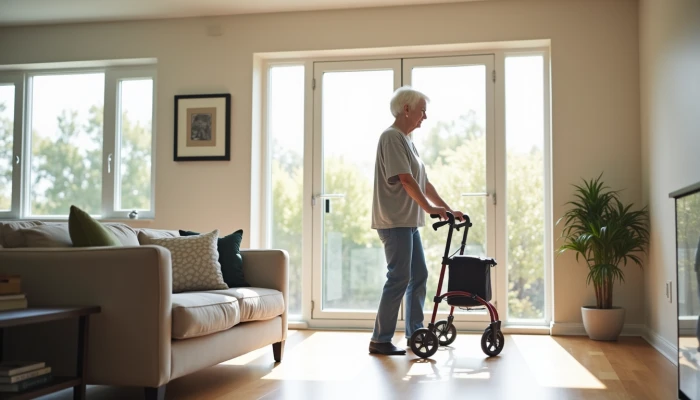
- Create enough space for a cane, walker, or helper if needed
- Check whether chairs and sofas are easy to get in and out of
- Improve lighting near reading areas, hall transitions, and room entrances
The kitchen deserves close attention because it combines standing, reaching, carrying, and heat. A safer setup usually reduces the need to stretch, bend deeply, or climb.
- Store everyday dishes and food at easy-to-reach heights
- Keep frequently used items near the main work area
- Wipe up spills quickly and watch for slick spots near the sink or stove
- Reduce counter clutter so appliances and prep areas stay usable
- Avoid storing needed items in high cabinets that require a stool
The bathroom is often one of the highest-risk rooms because surfaces are hard, space is tight, and floors get wet. Bathroom safety for seniors usually starts with traction, support, and easier transfers.
- Check for slippery tub or shower surfaces
- Look for stable support near the toilet and bathing area
- Review whether there is enough room to turn and move safely
- Consider whether towels, soap, and toiletries can be reached without twisting or overreaching
- Make sure lighting is bright enough for nighttime use
If support is needed in wet areas, grab bars for seniors are commonly used as part of a broader safety plan. Placement matters, and installation should be se.
Bedrooms should support safe transfers and nighttime movement. The bed should be easy to get into and out of, with a clear path to the door and bathroom. A lamp, light switch, or night light should be easy to reach without awkward stretching.
Stairs need special attention. Review both the steps and the approach to them. Check for se handrails, visible step edges, good lighting, and clutter-free landings. If carrying items on stairs is part of the routine, note that as a separate risk.
Use this quick room-by-room checklist during your walk-through.
- Entry: stable step surfaces, hand support, visible house numbers, easy lock access
- Hallways: clear paths, no cords, good lighting, night visibility
- Living room: stable seating, no loose rugs, reachable essentials
- Kitchen: accessible storage, dry floors, uncluttered counters
- Bathroom: traction, support, reachable supplies, enough turning space
- Bedroom: safe bed height, clear path, easy nighttime lighting
- Stairs: se railings, visible steps, no objects on treads or landings
This process helps with fall risk identification, but it also highlights where daily tasks may be tiring, awkward, or unsafe.
Key Modifications for Fall Prevention
Once hazards are identified, the next step is choosing changes that are practical and proportionate. In many homes, a few targeted adjustments can reduce obvious risks and make daily routines easier.
Start with the simplest improvements first.
- Remove clutter from walking paths
- Se or remove loose rugs
- Improve lighting in dark rooms, hallways, and stair areas
- Reorganize storage so daily-use items are easier to reach
- Add non-slip surfaces where floors are often wet
Bathrooms are often a priority because slips and awkward transfers are common there. Support features near showers, tubs, and toilets can make movement more controlled. Lighting improvements also matter because shadows and glare can make footing harder to judge.
In other rooms, accessibility changes may be just as important as obvious safety fixes. For example, easier-to-use door handles, cabinet pulls, and lower storage can reduce strain and lower the need for risky reaching or climbing.
A helpful way to decide what to do first is to match the modification to the problem it solves.
| Hazard or barrier | Practical improvement strategy |
|---|---|
| Wet, slippery bathroom floor | Add traction and improve drying routines |
| No stable support in shower or near toilet | Install se support features |
| Dim hallway or stair lighting | Add brighter lighting and improve switch access |
| Loose rugs or cluttered paths | Remove trip hazards and widen walking space |
| High shelves for daily items | Move essentials to reachable storage |
| Hard-to-use doors or cabinets | Use easier hardware and grips |
Not every home needs major renovation. Some households may only need better organization, lighting, and support in key areas. Others may need broader home modifications for seniors if mobility has changed significantly.
It is also important to know when a project should not be handled casually. Structural changes, sely mounted supports, ramps, widened doorways, and stair equipment may require qualified installers or home accessibility professionals. The goal is safer function, not improvised fixes.
Emergency Preparedness and Accessibility
A safe home is not only about preventing everyday accidents. It should also help the person respond to urgent situations, communicate with others, and move through the home as needs change.
Begin with basic emergency readiness.
- Keep emergency contacts easy to find
- Make sure a phone or alert method is reachable from key areas
- Check smoke and carbon monoxide alarms regularly
- Keep exits clear and easy to open
- Share important home access details with trusted family or caregivers when appropriate
Some families also consider medical alert systems or other monitoring tools as part of a broader safety plan. These tools may support faster communication in an emergency, but they should be treated as one layer of support rather than a complete solution.
Accessibility planning is equally important for long-term aging in place. A home that works today may become harder to navigate later. Review whether the person can move comfortably through doorways, manage thresholds, use the bathroom safely, and access essential rooms without unnecessary strain.
Potential accessibility improvements may include the following.
- Ramps where steps create a barrier
- Better hand support along stairs and entries
- Wider pathways for walkers or other mobility aids
- More open furniture layouts
- Bathroom changes that allow easier transfers and turning
If needs are becoming more complex, a trained professional such as an occupational therapist may be able to provide a more complete home safety assessment and suggest changes tied to daily routines. That can be especially helpful when the household is trying to balance safety, independence, and budget.
It also helps to create a simple communication plan.
- Decide who checks in regularly.
- Write down emergency contacts and backup contacts.
- Note where important items are kept, such as keys, medications, and assistive devices.
- Review what to do if there is a fall, power outage, or difficulty getting out of the home.
- Revisit the plan after any major health, mobility, or living arrangement change.
Emergency preparedness works best when it is clear, visible, and practiced enough that everyone knows the basics.
Conclusion
A home safety assessment is most useful when it becomes an ongoing habit rather than a one-time project. Needs change, routines change, and the home should be reviewed as those changes happen.
A structured walk-through helps families spot hazards, prioritize improvements, and focus on realistic next steps. Often, the best results come from combining simple fixes, thoughtful organization, and professional input when the situation calls for it.
Most of all, keep the conversation open. Older adults and caregivers may notice different problems, and both perspectives matter. A safer home usually starts with a shared plan, a careful room-by-room review, and steady follow-through over time.