A Room-by-Room Safety Guide for Aging at Home
Creating a safer home for an older adult does not have to start with a full remodel. In many cases, the most helpful changes are simple: better lighting, clearer walking paths, sturdier support points, and easier access to everyday items.
This guide focuses on home safety for seniors in the places where daily routines happen most often. It is designed for older adults planning ahead, family caregivers helping an aging parent, and households trying to make practical decisions without getting overwhelmed.
The goal is not to promise that any single change will prevent every fall or solve every mobility challenge. Instead, this guide offers room-specific improvements that can lower common hazards, support comfort, and make daily tasks easier. It also highlights where non-invasive changes may be enough and when it makes sense to bring in a licensed professional or a qualified home safety specialist.
Kitchen Safety for Seniors: Reducing Hazards in High-Use Areas
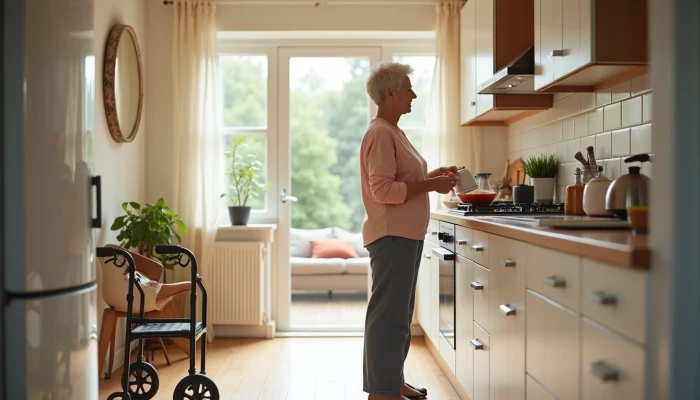
The kitchen is one of the most frequently used rooms in the home, which also makes it a common place for slips, overreaching, and clutter-related hazards. A safer setup usually starts with layout and organization rather than expensive upgrades.
First, clear the main walking route between the sink, refrigerator, and stove. Loose rugs, pet bowls, small stools, and stacked boxes can create tripping risks, especially for someone using a cane or walker. Keeping this path open supports steadier movement and makes the room easier to navigate during busy parts of the day.
Storage is another common problem. Reaching into high cabinets or bending into low shelves can increase strain and instability. Practical guidance on aging-in-place kitchen design often emphasizes placing everyday dishes, cookware, and pantry items between waist and shoulder height. Pullout shelves, lazy Susans, and drawer organizers can help without changing the whole room.
Lighting matters more than many families expect. Shadows near counters, sinks, and appliance controls can make routine tasks harder. Adding task lighting under cabinets, brighter bulbs in work areas, and motion-sensor lighting for nighttime trips can improve visibility without major construction.
A simple kitchen safety check can help you prioritize changes.
| Area | What to look for | Lower-disruption improvement |
|---|---|---|
| Walkways | Rugs, cords, clutter, narrow paths | Remove obstacles and widen the route |
| Storage | Frequently used items stored too high or too low | Move daily items to easy-reach shelves |
| Counters | Limited prep space near appliances | Create one clear, stable work zone |
| Lighting | Dim corners, shadows, hard-to-read controls | Add task lights or motion-sensor lights |
| Flooring | Slippery surfaces or uneven transitions | Use slip-resistant surfaces and smooth transitions |
If a kitchen still feels difficult to use after these changes, it may be worth asking an occupational therapist, aging-in-place specialist, or licensed contractor about accessibility upgrades. For some households, small modifications such as pullout shelving or adjusted work surfaces can make the room more usable without a full renovation.
Bathroom Safety: Key Modifications to Prevent Falls
Bathrooms deserve special attention because they combine wet surfaces, tight turning spaces, and frequent transfers in and out of the shower or near the toilet. Research and practical home safety guidance consistently point to bathroom modifications as an important part of fall-risk reduction.
One of the most widely recommended improvements is installing grab bars for seniors in the places where support is actually needed. Common locations include just outside or inside the shower, along the tub entry, and beside the toilet. Placement matters. Bars should be installed sely and positioned for real use, not added as a decorative feature.
Non-slip surfaces are another practical step. A slip-resistant bath mat outside the shower, adhesive strips or a slip-resistant treatment inside the tub or shower, and quick cleanup of water on the floor can all reduce common hazards. If stepping over a tub wall is already difficult, a shower conversion or lower-threshold entry may be worth discussing with a qualified professional.
Lighting also affects bathroom safety for seniors. Nighttime bathroom trips are a common challenge, especially when a person is waking up groggy or moving quickly. Brighter overhead lighting, a night-light between the bed and bathroom, and easy-to-reach switches can help reduce disorientation.
Use this bathroom checklist to spot issues quickly.
- Check whether there is a se handhold near the toilet.
- Check whether the shower or tub entry requires a high step.
- Check for slippery flooring inside and outside the bathing area.
- Check whether towels, soap, and toiletries can be reached without twisting or stretching.
- Check whether the bathroom door and interior layout allow enough space for safe movement.
- Check whether nighttime lighting is strong enough from the bedroom to the bathroom.
For some people, a shower chair, handheld showerhead, or raised toilet seat may also improve safety and comfort. These can be useful non-invasive options, but they should fit the person and the space properly. If there is uncertainty about placement, transfer safety, or balance needs, professional assessment is a better next step than guessing.
Common Areas and Stair Safety: Creating Smooth Transitions
Living rooms, hallways, entryways, and stairs often seem harmless because they are familiar. But these spaces can create repeated daily risks when lighting is uneven, flooring shifts underfoot, or support is missing where transitions happen.
Start with the routes used most often. Hallways and common areas should have clear walking space, stable furniture placement, and minimal floor clutter. Electrical cords stretched across a room, low coffee tables, and decorative items placed in narrow pathways can all increase the chance of a misstep.
Flooring should be as consistent as possible. Sudden changes in height between rooms, loose carpet edges, and slick surfaces can make walking less predictable. In many homes, improving traction and reducing uneven transitions is more realistic than replacing all flooring at once.
Stairs need special attention. Strong handrails on at least one side, and ideally both sides when possible, can improve support during ascent and descent. Consistent lighting at the top, bottom, and along the full staircase is also important. If an older adult avoids stairs, pauses frequently, or seems unsteady, that is a sign to reassess how often the stairs need to be used.
For entrances and multi-level homes, step-free access may become part of the conversation. Depending on the home and the person's mobility, that could mean a ramp, threshold adjustment, or a professionally installed stair lift. These are not do-it-yourself projects. Structural safety, fit, and code considerations matter.
A simple way to prioritize common-area changes is to work in this order.
- Clear the main walking paths.
- Improve lighting in every transition area.
- Se or replace slippery rugs and loose flooring edges.
- Add or reinforce handrails where support is needed.
- Evaluate whether stairs or entry steps require a professional solution.
National aging and home modification guidance commonly emphasizes matching the home to the person's current abilities rather than waiting for a crisis. Small changes in common areas can make movement easier today while also helping families plan ahead for future mobility needs.
Conclusion
A safer home usually comes from a series of thoughtful adjustments, not one dramatic fix. Better lighting, clearer pathways, se grab bars for seniors, and improved organization can all support aging in place in practical ways.
If you are deciding where to start, focus first on the rooms used every day and the hazards that show up repeatedly. Bathrooms, kitchens, hallways, and stairs usually offer the clearest opportunities for improvement.
When a project involves plumbing changes, structural work, ramps, or stair equipment, bring in licensed professionals. If you are unsure which changes matter most, a qualified home safety assessment can help you prioritize. The goal is not perfection. It is a home that is safer, easier to use, and better matched to the older adult living there.