How to Make Home Safety Upgrades When the Budget Is Tight
Trying to make a home safer for an older adult can feel overwhelming when the wish list is longer than the budget. Many families know changes are needed, but they are not sure what to do first, what can wait, or when it is worth paying for expert guidance.
The good news is that aging in place does not always start with major remodeling. In many homes, the first gains come from identifying the highest-risk areas, choosing a few high-impact fixes, and spreading larger projects over time.
A practical approach is to focus on safety, daily function, and fit. That means looking closely at where the person moves every day, what tasks are becoming harder, and which changes reduce risk without adding unnecessary cost. This guide walks through that process in a calm, budget-conscious way.
Identify High-Risk Areas for Targeted Modifications
When funds are limited, the goal is not to improve every room at once. It is to find the places where a modest change can make daily life safer and easier.
Implementation guidance for aging in place commonly points families toward a few priority zones first: bathrooms, stairs, and entryways. These areas often combine slippery surfaces, level changes, poor footing, and frequent daily use. They also affect basic routines such as bathing, getting in and out of the home, and moving between floors.
Start with observation. Watch for moments when the older adult hesitates, reaches for unstable support, shuffles around obstacles, or avoids a task altogether. Those patterns can reveal where a home modification may matter more than a cosmetic upgrade.
Use a simple triage checklist like this:
- Bathroom: Is there trouble stepping into the tub or shower? Is the floor slippery? Is there safe support near the toilet and bathing area?
- Stairs: Are railings se on the needed side? Are step edges easy to see? Is lighting adequate at the top and bottom?
- Entryway: Are there uneven thresholds, loose mats, or missing handholds? Is the path well lit?
- Bedroom: Is it easy to get in and out of bed? Is there a clear path to the bathroom at night?
- Kitchen: Are frequently used items within easy reach? Are there trip hazards or poor task lighting?
It also helps to think in terms of daily living challenges rather than rooms alone. A person who manages stairs well but struggles with bathing may need bathroom safety for seniors to be the first priority. Someone who uses a walker may need doorway clearance, threshold ramps, or better furniture spacing before any bathroom update.
A simple scoring framework can help families decide what to do first.
| Area or issue | Risk if unchanged | How often it affects daily life | Relative cost to improve | Priority |
|---|---|---|---|---|
| Slippery shower floor | High | Daily | Low to moderate | High |
| Poor stair lighting | High | Daily | Low | High |
| Decorative rug in hallway | Moderate to high | Daily | Low | High |
| Full kitchen remodel | Varies | Daily | High | Lower unless function is severely limited |
| Closet organization | Low | Occasional | Low | Lower |
This kind of ranking keeps the budget tied to actual safety and function. It also helps avoid spending early on changes that look helpful but do not address the person’s real mobility needs or habits.
Cost-Effective Solutions with Proven Safety Impact
Once the highest-risk areas are clear, the next step is to choose improvements that are relatively affordable and practical to implement.
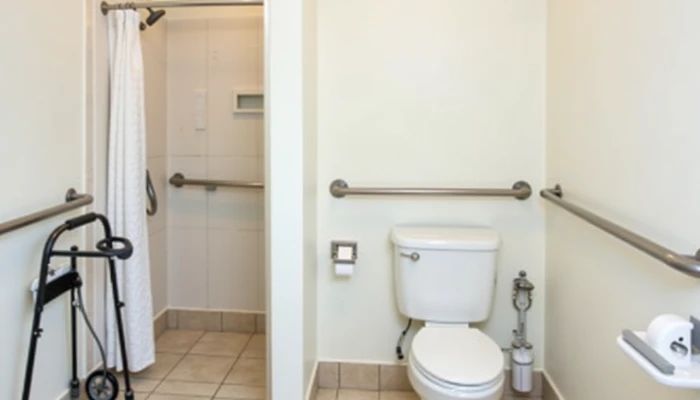
Many lower-cost changes focus on reducing slipping, tripping, and unstable movement. In bathrooms, that often means adding grab bars for seniors in key transfer areas, improving traction, and using shower chairs for seniors when standing for bathing is difficult. These changes are often more realistic as first steps than a full bathroom renovation.
Common high-impact, lower-cost options include:
- Adding se grab bars near the toilet and bathing area
- Using non-slip surfaces or mats designed for wet areas
- Placing a shower chair or bath seat where standing endurance is limited
- Improving lighting in halls, bathrooms, stairs, and entrances
- Replacing or securing loose rugs
- Marking step edges or adding stair treads for better traction
- Using threshold ramps where small height changes create a trip point
- Reorganizing frequently used items to reduce reaching and climbing
Lighting deserves special attention because it is often inexpensive to improve and affects multiple areas of the home. Motion-sensor lights, brighter bulbs where appropriate, and path lighting near entrances can make routine movement easier, especially at night.
It is also useful to separate safe simple fixes from projects that may require skilled installation. For example, removing clutter, improving organization, and replacing unstable floor coverings are often straightforward. But anything involving structural mounting, electrical work, or major accessibility changes should be handled by the right professional.
A practical way to compare options is to look at impact versus complexity.
| Modification | Likely purpose | Cost level | Installation complexity |
|---|---|---|---|
| Remove loose rugs | Reduce trip hazards | Low | Low |
| Add brighter or motion-activated lighting | Improve visibility | Low | Low to moderate |
| Install grab bars | Support transfers and balance | Low to moderate | Moderate |
| Add shower chair | Support seated bathing | Low to moderate | Low |
| Add threshold ramp | Ease transitions for mobility devices | Low to moderate | Low to moderate |
| Add stair treads | Improve traction and step visibility | Low to moderate | Low to moderate |
The key is not to assume that the lowest price always equals the best value. A low-cost item that does not match the person’s needs may go unused. A slightly more expensive change that supports a daily activity safely may be the better budget decision.
Research reviews on home modifications suggest that targeted changes can support safety, function, and daily living. That does not mean any one fix works for everyone, but it does support the idea of choosing practical modifications with a clear purpose rather than spending broadly without a plan.
When to Seek Professional Assessment for Budget Guidance
A professional assessment can be especially helpful when the budget is limited, because it may prevent spending on the wrong changes first.
Families often think expert input is only for large remodels. In reality, an assessment can be valuable when there is uncertainty about what is actually causing difficulty. For example, a bathroom may seem to need a major renovation, but the more immediate issue might be poor transfer support, lighting, or layout. A trained professional can help sort out those differences.
Depending on the situation, useful input may come from a certified aging-in-place specialist, an occupational therapist, or another qualified home safety professional. The value is not just technical knowledge. It is prioritization based on how the older adult actually lives in the space.
Professional guidance may help with:
- Identifying the highest-risk barriers in the home
- Matching modifications to current mobility and daily routines
- Distinguishing urgent needs from optional upgrades
- Avoiding purchases that do not fit the person’s abilities or habits
- Planning phased improvements in a logical order
This does not mean every family needs a full formal assessment right away. It may be most useful when:
- There have been recent near-falls or repeated difficulty with transfers
- Multiple rooms seem problematic and it is hard to know where to start
- The older adult uses a walker, wheelchair, or other mobility aid
- A larger project is being considered and mistakes would be expensive
- Family members disagree about what changes are necessary
Professional input should be seen as a planning tool, not a promise of outcomes. It can improve decision-making and reduce waste, but it does not replace medical care, caregiving, or licensed work where required.
For families trying to protect a limited budget, that planning value can matter as much as the recommendations themselves.
Phased Implementation for Long-Term Budget Management
A phased plan helps families make progress without feeling like every change must happen at once. This is often the most realistic way to handle home modifications for seniors when money, time, and decision-making energy are all limited.
Start with urgent safety risks first. In many homes, that means bathroom slip hazards, missing support at transfers, poor stair lighting, or tripping hazards along common walking paths. After that, move to improvements that support comfort and easier daily function.
A simple sequence might look like this:
- Remove immediate hazards such as loose rugs, clutter, and unstable furniture in walking paths.
- Improve lighting in stairs, bathrooms, hallways, and entrances.
- Add support features such as grab bars, handrails, or threshold solutions where needed.
- Introduce task-specific aids, such as shower seating or better storage access.
- Reassess after a few weeks to see what problems remain.
- Plan larger projects only if lower-cost changes are not enough.
This phased approach works best when each step is tied to a clear reason. Instead of saying, "We should update the bathroom," define the problem more precisely: "Stepping into the tub is unsafe," or "There is no stable support near the toilet." That keeps spending focused.
It can also help to divide projects into three budget buckets:
- Do now: Immediate safety risks affecting daily movement
- Do next: Important function improvements that can wait briefly
- Do later: Comfort, convenience, or larger remodels that are not urgent
Some families may also want to explore whether local programs, nonprofit support, or insurance-related benefits apply to certain modifications or assessments. Availability varies widely, so it is important to verify eligibility and requirements through reliable local or plan-specific sources rather than assuming coverage.
The biggest budgeting mistake is trying to solve every future possibility at once. A better approach is to make the home safer for current needs, review how those changes are working, and then decide what deserves the next round of spending.
Conclusion
A limited budget does not mean home safety improvements have to stop. It usually means the order of decisions matters more.
By focusing first on high-risk areas, choosing lower-cost changes with a clear safety purpose, and using professional assessment when the path is unclear, families can make aging in place more practical and manageable. The most useful plan is rarely the biggest one. It is the one that addresses real daily risks, fits the older adult’s habits, and leaves room to adjust over time.
If you are unsure where to begin, start small but start with purpose: identify the most difficult daily task, address the hazard connected to it, and build the next step from there.