Small Home Changes That Make Daily Life Easier for Seniors
When everyday tasks start to require more effort, the home itself can become part of the problem. Round doorknobs, dim hallways, slippery bathroom floors, and hard-to-reach storage may not seem serious at first, but they can make daily routines more tiring and less safe.
Thoughtful home modifications for seniors can reduce strain, support steadier movement, and help older adults stay more independent at home. Research on aging in place commonly points to simple environmental changes, especially in high-risk areas, as a useful part of fall-risk reduction and day-to-day function.
This guide focuses on practical updates for seniors with arthritis or limited hand strength. The goal is not to promise perfect safety. It is to help families prioritize realistic changes that make the home easier to use, room by room.
Entryway and Doorway Adjustments for Easier Navigation
Entry points and interior doorways often create friction throughout the day. If someone has arthritis, weak grip strength, or uses a walker, even opening a door can be uncomfortable. Small adjustments here can improve access without changing the whole home.
One of the simplest upgrades is replacing round knobs with lever-style or D-shaped handles. These are usually easier to push down or pull than a tight, twisting grip. That matters for older adults with joint pain, stiffness, or reduced hand strength.
Threshold ramps can also help where there is a lip at the front door, patio door, or room transition. Even a small height change can catch a toe, walker, or wheelchair footrest. A properly fitted ramp can smooth that transition and reduce the need to lift feet or mobility equipment over the edge.
Clear pathways matter just as much as hardware. Entry areas often collect shoes, baskets, packages, or small rugs. For someone with slower balance reactions, clutter near a doorway can turn a routine trip into a tripping risk.
A simple way to review this area is to check whether the person can do all of the following without strain:
- Open the door with one hand
- Step or roll through without catching on a threshold
- Turn around safely with a walker or cane
- Reach light switches without awkward stretching
- Move through the area without sidestepping around objects
If any of those steps feel difficult, the entryway is a good place to start. These changes are often relatively manageable compared with larger renovations, and they support safer movement many times a day.
Bathroom Safety Upgrades to Prevent Falls
Bathrooms deserve early attention because they combine water, hard surfaces, tight turns, and frequent transfers. For many families, this is the first room where home safety for seniors needs a more deliberate plan.
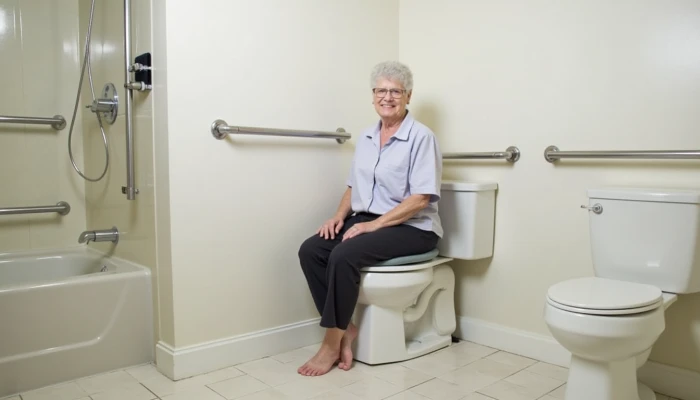
Grab bars for seniors are one of the most commonly recommended bathroom upgrades. They can provide support near the toilet, in the shower, and at the tub entry. The key idea is stability during transitions, not just something to hold in an emergency. Placement matters, so installation should match the person's actual movement pattern.
Non-slip mats and textured flooring can help reduce slipping in wet areas. Mats should lie flat and stay in place. If a mat bunches up or slides, it can create a new hazard instead of solving one.
Raised toilet seats can make sitting down and standing up easier by reducing how far the knees and hips need to bend. For seniors with arthritis, weakness, or balance concerns, that can make a daily task less strenuous.
Shower chairs for seniors can also help when standing for the full shower feels tiring or unsteady. They are most useful when paired with a layout that still allows easy reaching, safe transfers, and access to soap, towels, and controls.
If you are deciding what to address first, this comparison can help:
| Bathroom issue | Modification to consider | Why it may help |
|---|---|---|
| Trouble lowering onto the toilet | Raised toilet seats | Reduces bending and effort during transfers |
| Unsteady stepping into the shower | Grab bars for seniors | Adds support during entry and exit |
| Fatigue while bathing | Shower chairs for seniors | Allows seated bathing with less strain |
| Slippery wet floor | Non-slip mats or textured flooring | Improves traction in high-risk areas |
A systematic review of home modifications for aging in place found that changes such as grab bars and non-slip surfaces are associated with better safety and function, especially in bathrooms. Still, no single upgrade is enough on its own. The safest setup usually combines support, traction, and enough space to move comfortably.
Lighting and Environmental Adjustments for Better Visibility
Good lighting supports safer movement, but it is often overlooked because the problem shows up most at night or during transitions between rooms. A home can feel familiar in daylight and still become difficult to navigate after dark.
Motion-sensor lighting is a practical option in hallways, bathrooms, kitchens, and near the bed. It can reduce the need to search for a switch in the dark, which is especially helpful for older adults who wake during the night or move more slowly.
Night lights with motion detection can work well in smaller spaces and along common nighttime routes. The goal is not bright, harsh light everywhere. It is enough light, in the right places, to make edges, flooring changes, and obstacles easier to see.
Task lighting also matters. Kitchen counters, reading chairs, medication storage areas, and entry tables all benefit from focused light. Better visibility can reduce hesitation, awkward reaching, and missteps.
Use this quick lighting checklist to spot common gaps:
- Path from bed to bathroom is easy to see at night
- Hallways have consistent lighting without dark patches
- Light switches are easy to reach at room entrances
- Kitchen work areas are bright enough for food prep
- Stairs, if present, are clearly lit from top to bottom
- Glare from exposed bulbs or shiny surfaces is limited
Environmental adjustments should go beyond lighting alone. Loose cords, low furniture, and decorative items placed in walking paths can be harder to notice in dim conditions. Better lighting works best when the route itself is simple and uncluttered.
Some implementation guidance also emphasizes that visibility improvements can support confidence as much as safety. When a person can clearly see where they are going, they may move more naturally and with less hesitation.
Kitchen and Living Area Modifications for Independence
The kitchen and living areas are where many older adults want to keep doing things for themselves. That makes these rooms important for independence, not just safety. The right changes can reduce reaching, bending, carrying, and awkward turning.
Pull-out shelves and lower storage can make everyday items easier to access. Frequently used dishes, pantry goods, and small appliances should be stored between knee and shoulder height when possible. This reduces the need to crouch or stretch overhead, both of which can be difficult for someone with arthritis or balance concerns.
Non-slip flooring in high-traffic areas can help create more stable footing. Flooring should also be as even as possible from one area to the next. Sudden transitions, curled rug edges, or slick surfaces can interrupt gait and increase the chance of a stumble.
Furniture layout is another major factor. A room may feel cozy but still be hard to navigate with a cane, walker, or slower turning radius. Wider, unobstructed pathways can make movement easier and reduce the need to twist around corners or squeeze between tables.
A useful way to prioritize these spaces is to work in sequence:
- Remove obstacles from the main walking routes.
- Move daily-use items to easy-to-reach storage.
- Improve traction on the floor surface.
- Adjust seating so it is stable and easy to get in and out of.
- Recheck whether mobility aids can pass through comfortably.
In living areas, stable chairs with supportive arms may be more useful than deep, low seating that is hard to rise from. In kitchens, simple reorganization often delivers noticeable benefits before any larger remodel is considered.
These changes are not about making the home look clinical. They are about making ordinary routines like cooking, sitting down, standing up, and moving from room to room require less effort and less risk.
Conclusion
The most helpful home updates are usually the ones that match the person's real daily challenges. For one household, that may mean D-shaped handles and clearer doorways. For another, it may be grab bars, raised toilet seats, and motion-sensor lighting along the path to the bathroom.
What matters most is thoughtful prioritization. Start with the places where strain, slipping, or difficult transfers happen most often. Then build from there.
Home modifications for seniors can support comfort and independence, but they work best when tailored to the individual. If needs are changing quickly, or if larger structural changes are being considered, a qualified home safety assessment or accessibility professional can help identify the safest next steps.